

How to Get Prescribed Adderall If you have been struggling to stay focused, finish tasks, or control impulsive behavior for most of your life, you may have attention deficit hyperactivity disorder (ADHD). Adderall is one of the most widely prescribed and clinically studied medications for ADHD, but it is a Schedule II controlled substance, which means getting a prescription requires a formal medical evaluation.
This guide walks you through every step of the process, from recognizing symptoms and finding the right doctor, to what happens during your evaluation, what doctors are actually looking for, and how to maintain your prescription over time. You will also find information on online prescriptions, what disqualifies someone from getting Adderall, and what your options are if Adderall is not right for you.
Quick Summary
- Adderall requires a prescription from a licensed, DEA-registered provider.
- A formal ADHD evaluation is required before any prescription is issued.
- Primary care physicians, psychiatrists, and nurse practitioners can prescribe Adderall.
- As of 2023, telehealth prescribing of controlled substances requires an in-person visit in most states.
- Adderall is not appropriate for everyone, and doctors assess both benefits and risks carefully.
- Ongoing follow-up appointments are required to maintain your prescription.
What Is Adderall and Why Is a Prescription Required?
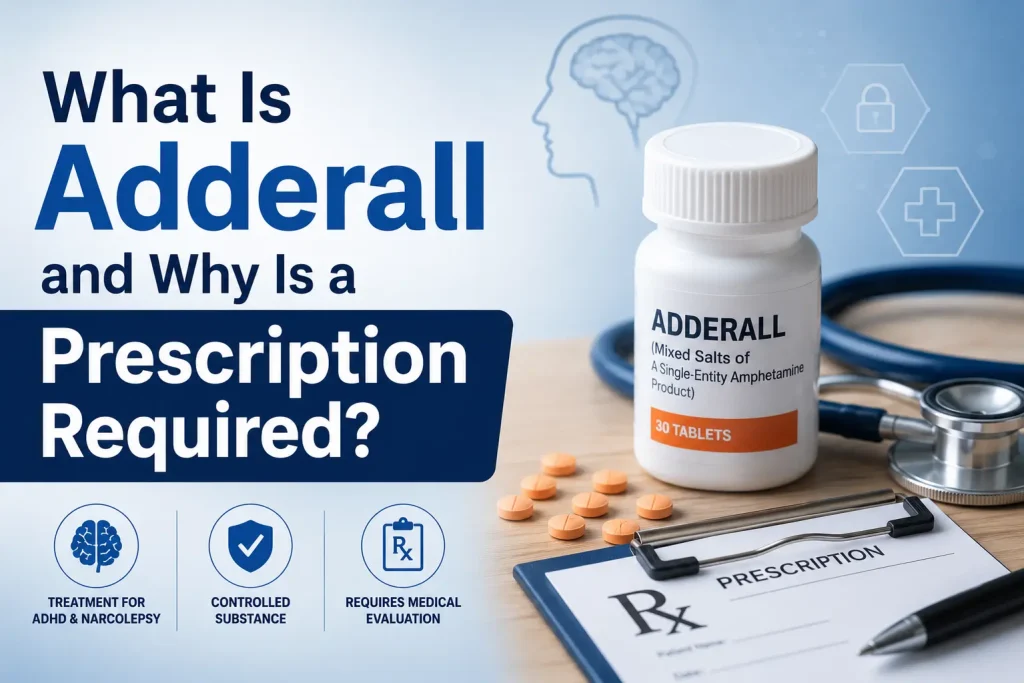
Adderall is a brand-name medication containing a combination of amphetamine salts, specifically amphetamine and dextroamphetamine. It works by increasing the levels of dopamine and norepinephrine in the brain, which improves attention, impulse control, and executive function in people with ADHD.
Because Adderall stimulates the central nervous system, it has a high potential for misuse, dependency, and diversion. For this reason, the U.S. Drug Enforcement Administration (DEA) classifies it as a Schedule II controlled substance, the most restricted category for drugs with accepted medical uses. This means:
- No prescription refills are allowed; a new written or electronic prescription is required each time.
- Prescriptions cannot be called in to a pharmacy by phone in most states.
- Prescribers must be DEA-registered and follow strict state regulations.
- Early refills are generally not permitted, and quantity limits apply.
Understanding this legal framework helps you approach the process with realistic expectations. Doctors are not withholding Adderall to make your life difficult. They are following federal law and protecting patient safety.
Who Qualifies for an Adderall Prescription?

Adderall is FDA-approved for two conditions:
- Attention Deficit Hyperactivity Disorder (ADHD) in children aged 3 and older, adolescents, and adults.
- Narcolepsy in patients aged 6 and older.
The vast majority of Adderall prescriptions are for ADHD. To qualify, you must meet the diagnostic criteria set out in the Diagnostic and Statistical Manual of Mental Disorders, Fifth Edition (DSM-5).
DSM-5 ADHD Diagnostic Criteria
For adults (17 and older), a diagnosis requires at least five persistent symptoms of inattention or hyperactivity-impulsivity (children under 17 need six or more). These symptoms must:
- Be present for at least six months
- Have been present before age 12
- Occur in two or more settings (for example, at home and at work)
- Clearly interfere with social, academic, or occupational functioning
- Not be better explained by another mental health condition
Common Symptoms That May Lead to an ADHD Evaluation
Inattentive symptoms include:
- Frequently losing items needed for tasks (keys, phone, documents)
- Difficulty sustaining attention during meetings, reading, or conversations
- Failing to follow through on instructions or finish tasks
- Being easily distracted by unrelated stimuli
- Making careless mistakes in work or school
Hyperactive and impulsive symptoms include:
- Interrupting others frequently
- Difficulty staying seated or waiting in lines
- Talking excessively or blurting out answers
- Acting without thinking about consequences
- Feeling constantly restless, even in adults
Important:Anxiety, depression, sleep disorders, thyroid problems, and trauma can all mimic ADHD symptoms. A thorough evaluation rules these out before a diagnosis is made. Self-diagnosing based on social media content or online quizzes is not a substitute for professional evaluation.
What Doctors Look for During an ADHD Evaluation

This is one of the most under-explained parts of the process, and it is something most competitor articles skip over. Knowing what your doctor is assessing helps you prepare and communicate honestly, which leads to a more accurate diagnosis and safer treatment.
The Clinical Interview
Your provider will conduct a detailed clinical interview covering:
- Symptom history: When did symptoms first appear? Were they present in childhood? Do they affect multiple areas of life?
- Functional impairment: How do symptoms affect your job, relationships, finances, and daily routines?
- Medical history: Do you have heart conditions, high blood pressure, a history of seizures, or past substance use disorders?
- Psychiatric history: Have you been diagnosed with or treated for anxiety, depression, bipolar disorder, or psychosis?
- Family history: ADHD has a strong genetic component. A family history of ADHD strengthens the diagnostic picture.
- Current medications: Some drugs interact with Adderall or mask symptoms.
Standardized Rating Scales
Doctors frequently use validated questionnaires to quantify symptom severity. Common tools include:
- Adult ADHD Self-Report Scale (ASRS-v1.1) – developed with the World Health Organization
- Conners’ Adult ADHD Rating Scale (CAARS)
- Vanderbilt Assessment Scale – more commonly used for children
- Brown ADD Rating Scales
Collateral Information
For children, teachers and parents typically complete rating scales independently. For adults, a close family member or partner may be asked to provide their observations. This corroborating information is valuable because ADHD symptoms must be present across multiple settings.
Psychological Testing (When Ordered)
Not every evaluation includes neuropsychological testing, but a psychiatrist or neuropsychologist may order:
- Continuous Performance Tests (CPT): Computer-based tests that measure sustained attention, impulsivity, and reaction time.
- Intelligence and academic achievement tests: Used when learning disabilities need to be ruled out.
- Working memory assessments: ADHD frequently affects working memory, and testing confirms this pattern.
Be aware that neuropsychological testing alone cannot diagnose ADHD. It supplements, but does not replace, the clinical interview.
Step-by-Step: How to Get Prescribed Adderall

Step 1: Recognize and Document Your Symptoms
Before your appointment, spend time observing how your symptoms affect your daily life. Keep a symptom journal for two to four weeks and note:
- Specific tasks where you lose focus or make errors
- Situations where impulsivity caused problems
- Feedback from supervisors, teachers, or family about your behavior
- How long these issues have been happening
Bring any school records, old report cards, or previous evaluations if you have them. Evidence of childhood symptoms is particularly helpful for an adult diagnosis, since DSM-5 requires onset before age 12.
Step 2: Choose the Right Type of Provider
Several types of healthcare providers can diagnose ADHD and prescribe Adderall, but they differ in their evaluation depth and specialization:
| Provider Type | Can Diagnose ADHD | Can Prescribe Adderall | Best For |
| Primary Care Physician (PCP) | Yes | Yes (most states) | Initial evaluation, ongoing management |
| Psychiatrist | Yes | Yes | Complex cases, co-occurring mental health conditions |
| Nurse Practitioner (NP) | Yes | Yes (varies by state) | Routine ADHD cases in many states |
| Physician Assistant (PA) | Yes | Yes (varies by state) | Routine ADHD cases with physician oversight |
| Neurologist | Yes | Yes | Cases involving neurological concerns |
| Psychologist | Yes (diagnosis only) | No | Comprehensive psychological testing |
For straightforward adult ADHD, a primary care physician or psychiatric nurse practitioner is often the most accessible starting point. If your case involves significant co-occurring conditions such as depression, anxiety, or bipolar disorder, a psychiatrist is the more appropriate choice.
Step 3: Schedule an Appointment and Prepare
When calling to schedule, mention that you are seeking an ADHD evaluation. This helps the office allocate the appropriate amount of time. Bring the following to your appointment:
- Government-issued photo ID
- Insurance card
- List of all current medications, including supplements
- Records of any prior mental health treatment
- Your symptom journal or notes
- School records or report cards showing childhood symptoms (if available)
- Contact information of a family member who can corroborate your history
Step 4: Complete the Evaluation Honestly
Answer every question as accurately as possible. Do not exaggerate symptoms to appear more impaired, and do not minimize them out of fear of being judged. Providers are trained to detect inconsistencies, and dishonesty can result in a delayed diagnosis, an incorrect diagnosis, or being flagged in the prescription monitoring database.
Be open about any history of substance use. A past substance use disorder does not automatically disqualify you from an Adderall prescription, but it does change how your provider approaches treatment. Concealing this history creates genuine medical risk.
Step 5: Receive Your Diagnosis and Treatment Plan
If your evaluation supports an ADHD diagnosis, your provider will discuss treatment options. Adderall is one option, but it is not always the first choice. Depending on your situation, your provider may recommend:
- Adderall IR (immediate release): Lasts 4-6 hours, taken 2-3 times daily.
- Adderall XR (extended release): Lasts 10-12 hours, taken once daily.
- Alternative stimulants: Ritalin (methylphenidate), Vyvanse (lisdexamfetamine), or Concerta.
- Non-stimulant medications: Strattera (atomoxetine), Intuniv (guanfacine), or Kapvay (clonidine) for those who cannot tolerate stimulants.
Your provider will start you at the lowest effective dose and titrate upward based on your response and tolerability. Do not expect to walk out of your first appointment with a high dose. Starting low and going slow is standard medical practice.
Step 6: Fill Your Prescription Properly
Adderall is a Schedule II controlled substance and requires a written or electronic prescription. Important points:
- Take your prescription to a pharmacy as soon as possible, as Schedule II prescriptions expire quickly (typically 30 days, but this varies by state).
- Some pharmacies have limited stock. Call ahead to check availability, especially for brand-name Adderall.
- Generic amphetamine salts are therapeutically equivalent and significantly less expensive.
- A prescription discount card such as GoodRx or SingleCare can substantially reduce out-of-pocket costs.
Who Should Not Take Adderall?
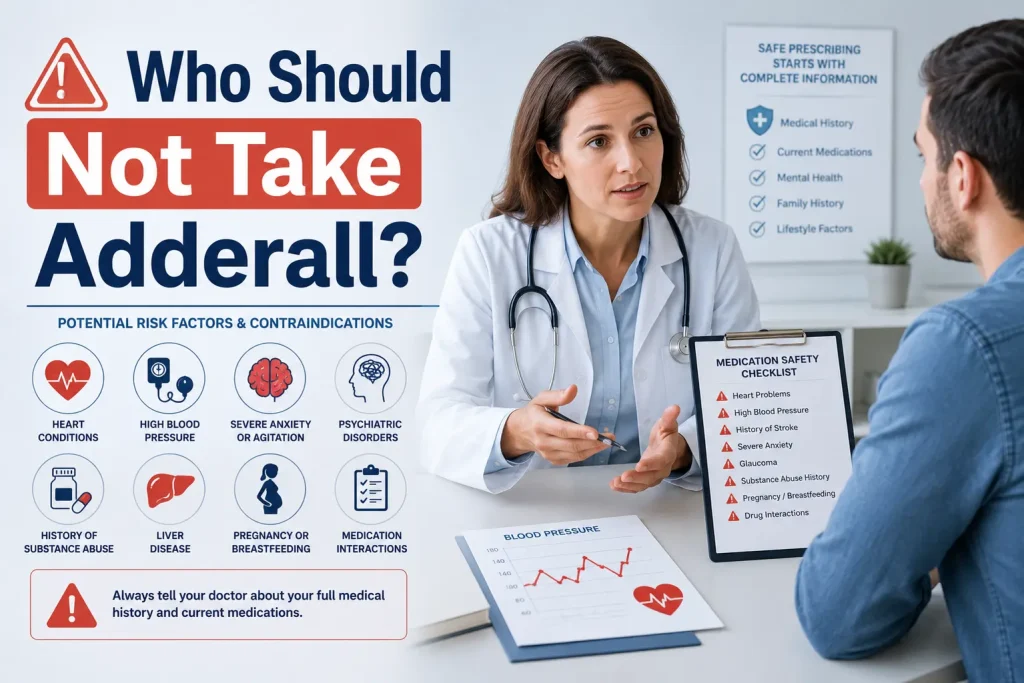
Not everyone who has ADHD is a candidate for Adderall. Your provider will carefully assess contraindications before prescribing.
Absolute Contraindications
- Known hypersensitivity to amphetamine or any component of Adderall
- Concurrent use of monoamine oxidase inhibitors (MAOIs) or use within the past 14 days
- Symptomatic cardiovascular disease
- Moderate to severe hypertension
- Hyperthyroidism
- History of drug abuse (requires case-by-case assessment with significant caution)
- Glaucoma
Conditions Requiring Careful Evaluation Before Prescribing
- Anxiety disorders: Adderall can worsen anxiety symptoms in some patients. Your provider may try a non-stimulant first.
- Bipolar disorder: Stimulants can trigger manic episodes. Mood stabilization should be achieved before starting Adderall.
- Psychosis or schizophrenia: Adderall can exacerbate psychotic symptoms.
- Heart arrhythmias or structural heart defects: Stimulants increase heart rate and blood pressure. A cardiac evaluation may be required.
- History of seizures: Adderall may lower the seizure threshold in susceptible individuals.
- Pregnancy and breastfeeding: Adderall carries risks for the developing fetus and nursing infant. Discuss alternatives with your provider.
Getting an Adderall Prescription Online: What Is Currently Possible?

Telehealth expanded significantly during the COVID-19 pandemic, and for a period, DEA regulations were relaxed to allow prescriptions for controlled substances including Adderall without an in-person visit. That regulatory landscape has changed.
The Ryan Haight Act and Post-Pandemic Rules
The Ryan Haight Online Pharmacy Consumer Protection Act requires an in-person medical evaluation before a controlled substance can be prescribed via telehealth. The DEA’s pandemic-era flexibilities that allowed online ADHD prescriptions without in-person visits ended in 2023, and the DEA has been working to establish new telemedicine rules.
As of 2026, the current rules generally require:
- A prior in-person evaluation by a DEA-registered provider before a telehealth provider can prescribe Adderall, OR
- The telehealth platform must have a relationship with an in-person clinical network to facilitate an initial evaluation.
What This Means for Patients in 2026
Some telehealth platforms advertise ADHD treatment and medication management. Before signing up, ask specifically: Does the initial evaluation require an in-person visit? Do they prescribe Schedule II stimulants like Adderall, or only non-stimulant alternatives? What states do they operate in? Be cautious of any platform claiming to prescribe Adderall entirely online without any in-person component, as this may not comply with current federal regulations.
Legitimate Uses of Telehealth for ADHD
Even within current regulations, telehealth platforms play a valuable role:
- Follow-up appointments and medication management after an initial in-person evaluation
- Prescription renewals for established patients
- Access to non-stimulant ADHD medications that are not Schedule II controlled substances
- ADHD therapy and coaching delivered via video
What Happens After You Get Your Prescription?
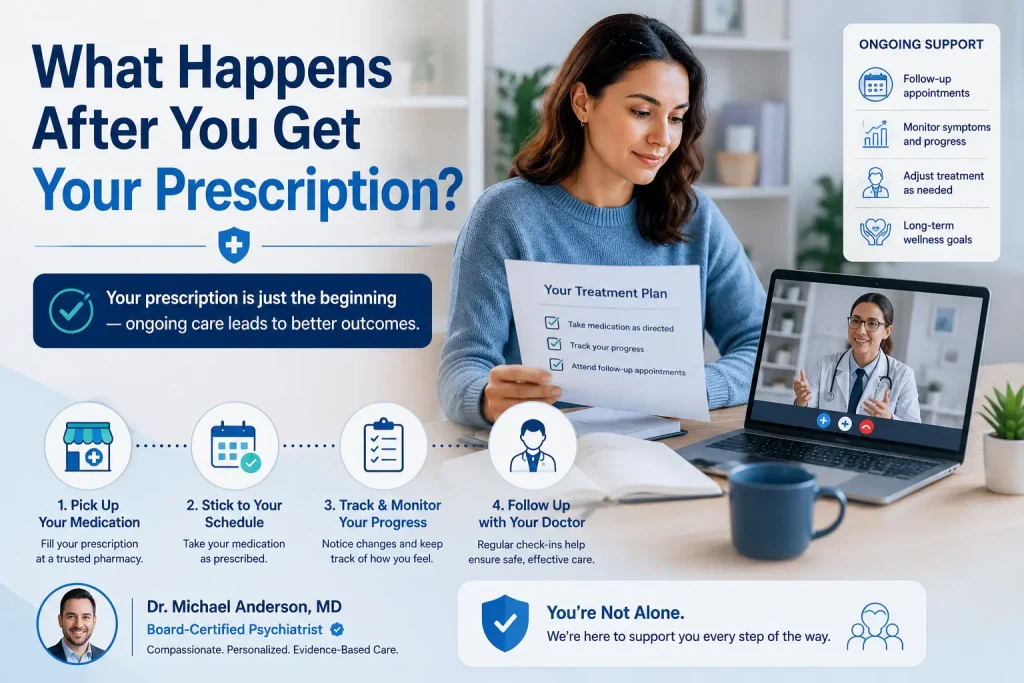
Starting Your Medication
Your first few weeks on Adderall are an adjustment period. Common initial side effects include:
- Decreased appetite, especially in the middle of the day
- Difficulty falling asleep if taken too late in the day
- Mild headaches as the medication takes effect or wears off
- Dry mouth
- Increased heart rate or mild anxiety
Most of these effects diminish after the first two to four weeks as your body adjusts. If they are severe or persistent, contact your provider.
Follow-Up Appointments Are Mandatory
Adderall prescriptions require regular monitoring. Your provider will typically schedule follow-up appointments:
- At 2-4 weeks: To assess initial response, adjust dosage if needed, and check for side effects.
- At 1-3 months: To evaluate ongoing effectiveness and review blood pressure, heart rate, and sleep.
- Every 3-6 months thereafter: For stable patients, routine monitoring continues throughout treatment.
Missing follow-up appointments is the most common reason prescriptions lapse. These appointments are not optional formalities. They are medically and legally required for continued prescribing.
Prescription Monitoring Programs (PMPs)
Every state operates a Prescription Monitoring Program database. Every time you fill a controlled substance prescription, it is logged. Your prescriber can see your complete Schedule II prescription history across all providers and pharmacies. This system exists to:
- Prevent dangerous drug interactions
- Identify patterns of overuse or diversion
- Ensure continuity of care
Do not attempt to obtain Adderall from multiple providers simultaneously. This practice, known as doctor shopping, is illegal and will be detected by state PMPs.
Traveling with Adderall
If you travel:
- Always carry Adderall in its original pharmacy-labeled bottle.
- Carry a copy of your prescription or a letter from your provider.
- If traveling internationally, research the legal status of Adderall in your destination country. Adderall is classified as an illegal substance in several countries, including Japan, Brazil, and many others. Carry a physician’s letter and, if required, formal import authorization.
What to Do If Your Provider Denies Your Prescription
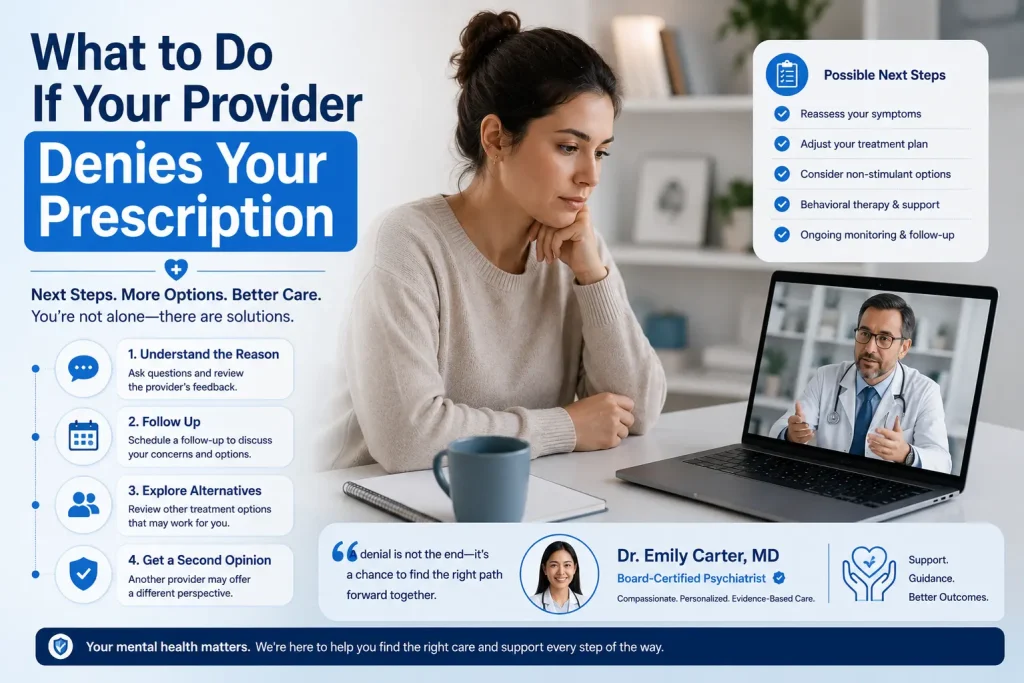
If a provider evaluates you and determines Adderall is not appropriate, this does not necessarily mean the end of the road. There are several constructive next steps:
- Ask for the specific reason. Understanding why the provider is not prescribing helps you address the issue. Common reasons include insufficient symptom documentation, a co-occurring condition that needs to be treated first, or concerns about cardiovascular risk.
- Seek a second opinion. You have the right to consult another qualified provider. A psychiatrist who specializes in ADHD may be better positioned to evaluate your case than a general practitioner.
- Request comprehensive neuropsychological testing. If the diagnosis is unclear, formal testing by a licensed psychologist can provide objective data to support or refute an ADHD diagnosis.
- Consider non-stimulant options. If Adderall specifically is contraindicated for you, non-stimulant medications like Strattera, Intuniv, or Wellbutrin (used off-label) may be appropriate alternatives.
- Address any co-occurring conditions first. If anxiety or depression is contributing to or mimicking your ADHD symptoms, treating those conditions may clarify the diagnostic picture.
Adderall Dosage: What to Expect
Understanding dosage ranges helps you have an informed conversation with your provider and set realistic expectations.
| Formulation | Typical Starting Dose | Typical Maintenance Dose | Duration of Effect |
| Adderall IR (immediate release) | 5 mg once or twice daily | 5-30 mg per dose, 2-3x daily | 4-6 hours |
| Adderall XR (extended release) | 5-10 mg once daily | 10-30 mg once daily | 10-12 hours |
| Generic amphetamine salts IR | 5 mg once or twice daily | 5-30 mg per dose | 4-6 hours |
| Generic amphetamine salts XR | 5-10 mg once daily | 10-30 mg once daily | 10-12 hours |
The FDA-approved maximum daily dose for ADHD is 40 mg for adults, though some providers may prescribe higher doses in specific clinical contexts. Your actual dose will be determined by your weight, age, symptom severity, and response to the medication.
Alternatives to Adderall for ADHD Treatment
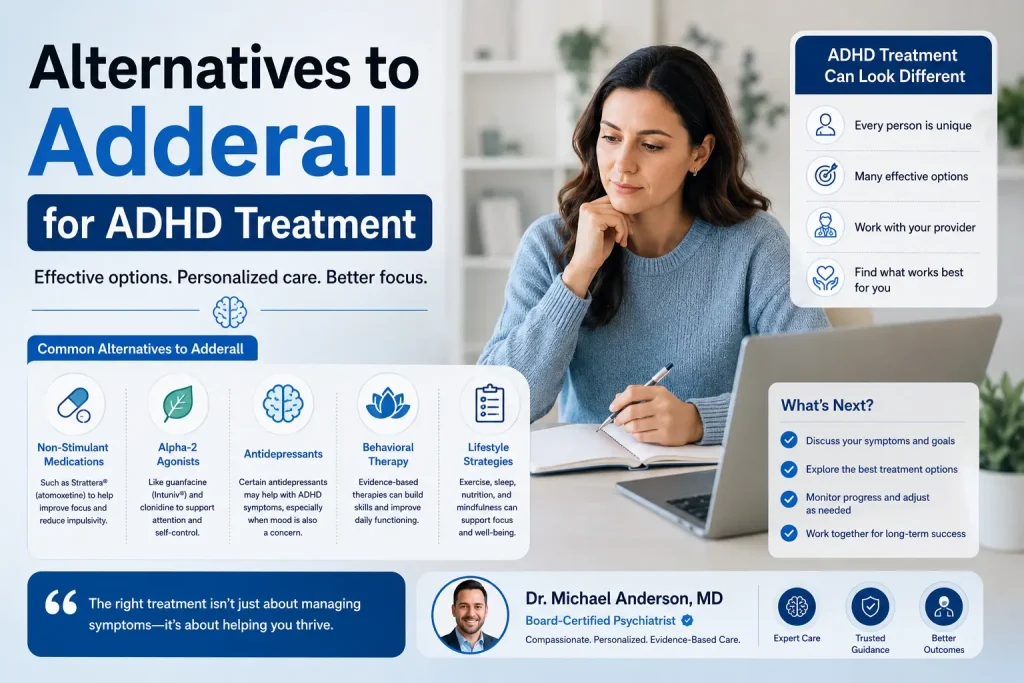
Adderall is not the only option, and for some patients, it is not the best option. Discuss the full range of treatments with your provider.
Other FDA-Approved Stimulant Medications
- Vyvanse (lisdexamfetamine): A prodrug form of dextroamphetamine considered to have lower abuse potential. Often preferred for adults with ADHD and binge eating disorder.
- Ritalin / Concerta (methylphenidate): A different class of stimulant with a similar mechanism. Some patients respond better to methylphenidate than amphetamine-based medications.
- Focalin (dexmethylphenidate): The active isomer of methylphenidate, sometimes better tolerated.
- Daytrana: A methylphenidate patch that delivers medication transdermally.
Non-Stimulant Medications
- Strattera (atomoxetine): The only non-stimulant specifically FDA-approved for ADHD in both children and adults. Not a controlled substance. Takes 4-6 weeks for full effect.
- Intuniv (guanfacine ER): An alpha-2 agonist that reduces impulsivity and hyperactivity. Often used in combination with stimulants or as a standalone.
- Kapvay (clonidine ER): Similar mechanism to guanfacine. Particularly helpful for impulsivity and sleep issues related to ADHD.
- Wellbutrin (bupropion): An antidepressant used off-label for ADHD. Not FDA-approved for ADHD but supported by clinical evidence.
Non-Medication Approaches
Evidence-based non-medication strategies that can complement or, in mild cases, replace medication include:
- Cognitive Behavioral Therapy (CBT): Specifically adapted CBT protocols for ADHD target organizational skills, time management, and emotional regulation.
- ADHD coaching: Coaches trained in ADHD help clients develop practical systems for managing daily tasks, deadlines, and responsibilities.
- Exercise: Regular aerobic exercise increases dopamine and norepinephrine, producing effects similar in mechanism to stimulant medications. Multiple studies support exercise as an adjunct treatment.
- Sleep hygiene: ADHD and sleep disorders frequently co-occur. Treating underlying sleep problems can significantly improve attention and impulse control.
- Dietary adjustments: While no specific ADHD diet is proven, reducing ultra-processed food, maintaining stable blood sugar, and ensuring adequate protein can support brain function.
Adderall and Common Concerns: Honest Answers

Is Adderall Addictive?
Adderall has a recognized potential for psychological and physical dependence when misused. When taken as prescribed under medical supervision, the risk of addiction is substantially lower, but it is not zero, particularly for individuals with a personal or family history of substance use disorder. If you have concerns about this, discuss them openly with your provider.
Will Adderall Change My Personality?
When prescribed at the correct dose, Adderall should not change your fundamental personality. What it does is reduce the interference that ADHD symptoms create, allowing your natural capabilities and character to function more freely. If you or those around you notice that the medication makes you feel flat, emotionally blunted, or unlike yourself, this is a signal to talk to your provider about adjusting the dose.
What Happens If I Take Adderall Without ADHD?
A common misconception is that Adderall turns anyone into a productivity superhero. In reality, the effects of amphetamines in people without ADHD differ from those with the condition. Without ADHD, Adderall can increase heart rate, cause significant anxiety, disrupt sleep, and create rebound effects when it wears off. Taking Adderall without a prescription is illegal and carries genuine health risks.
Can I Stop Taking Adderall Whenever I Want?
Unlike some psychiatric medications, Adderall does not typically require a slow taper for discontinuation. However, stopping abruptly after extended use can cause a crash effect characterized by fatigue, low mood, and difficulty concentrating for several days. Always discuss any plans to stop your medication with your provider.
Insurance Coverage and Cost of Adderall
Understanding the cost of Adderall before you start treatment helps you plan and avoid unexpected expenses.
Insurance Coverage
Most health insurance plans, including Medicare Part D and Medicaid, cover generic amphetamine salts (the generic form of Adderall). Brand-name Adderall XR may require prior authorization from your insurer. Contact your insurance company before your appointment to understand your formulary and copay tier.
Cost Without Insurance
- Generic Adderall IR (amphetamine salts): approximately $30-$60 for a 30-day supply at most pharmacies.
- Generic Adderall XR: approximately $80-$120 for a 30-day supply without insurance.
- Brand-name Adderall XR: can exceed $300 per month without coverage.
Ways to Reduce Cost
- Prescription discount cards: Programs like GoodRx, RxSaver, and SingleCare are free and can reduce costs significantly at participating pharmacies.
- Manufacturer savings programs: The maker of Adderall XR offers patient assistance programs for those who qualify.
- Ask for generic: Always confirm with your pharmacist that you are filling the generic version unless your provider has specifically required brand-name.
- 90-day supplies: Some insurers offer a lower per-unit cost for a 90-day supply through mail-order pharmacy, though state regulations on Schedule II quantities vary.
Frequently Asked Questions
How long does it take to get prescribed Adderall?
It depends on the doctor. Some primary care doctors may prescribe it in one visit, while psychiatrists may require an initial consultation and follow-up. Usually, the process takes 2 to 6 weeks, though telehealth may be faster.
Can I ask my doctor directly for Adderall?
Yes, but explain your symptoms instead of asking for the medicine directly. For example, say you struggle with focus and want an ADHD evaluation.
Does ADHD medication help adults?
Yes. Research shows medications like Adderall can help adults with ADHD as much as children, often combined with therapy and organization strategies.
Can my child get an Adderall prescription?
Yes. A pediatrician or child psychiatrist usually evaluates children. Parents and teachers may also provide input during diagnosis.
What if I cannot afford the evaluation?
Low-cost options include community mental health centers, FQHCs, university clinics, and some telehealth services.
Can Adderall be prescribed for anxiety or depression?
No. Adderall is not approved for anxiety or depression and may worsen anxiety in some people.
Conclusion
Getting prescribed Adderall is not a simple transaction. It is a clinical process designed to protect your safety and ensure you receive the right treatment for your actual condition. The evaluation may feel time-consuming or thorough to the point of intimidating, but every step serves a purpose.
The most important things you can bring to this process are honesty about your symptoms, realistic expectations about the timeline, and willingness to engage with your provider as a partner in your care. ADHD is a real, treatable condition, and when treatment is matched carefully to the individual, the impact on quality of life can be profound.
If you believe you have ADHD, start by scheduling an appointment with your primary care physician and describe how your symptoms affect your daily life. That first conversation is where meaningful change begins.
Medical Disclaimer
This article is intended for general informational purposes only and does not constitute medical advice, a diagnosis, or a treatment recommendation. Adderall is a Schedule II controlled substance and may only be prescribed by a licensed, DEA-registered healthcare provider following a formal clinical evaluation. Always consult a qualified healthcare professional for guidance specific to your medical situation. Do not attempt to obtain prescription medications without a valid prescription.
You May Also Like It:
How Do I Use Search Live to Identify the Signs Showing on My Car Dashboard?
How Can I Get a New Gas Pipeline Connection? What Should I Do to Make the Process Easier?
how to identify if the pashmina shawl i am buying is genuine?