
Window blinds work hard every single day. They block harsh sunlight, give you privacy, and add style to any room. But all that exposure to air, dust, cooking grease, humidity, and everyday life means they quietly collect dirt that most people barely notice – until it becomes impossible to ignore.
This guide covers everything you need to know about how to clean blinds, from a quick weekly dust-down to a full deep clean, for every type of blind material. You will also find tips that most other guides skip entirely: how to clean motorized blinds safely, how to handle blinds in high-humidity rooms, how to tackle pet hair and dander, and how to know when your blinds are simply past saving.
Whether you have aluminum mini blinds in your kitchen, wooden blinds in your living room, or delicate fabric Roman shades in your bedroom, this guide has the right method for you.
Why Cleaning Your Blinds Regularly Actually Matters
Most people clean their blinds only when they look visibly dirty. But by that point, dust and allergens have already been building up for weeks or months. Here is why regular cleaning is worth the effort:
- Dust and pet dander trapped in blinds recirculate into your indoor air every time the blinds move or a window opens. This directly affects air quality, especially for anyone with allergies or asthma.
- In kitchens, airborne grease from cooking settles on blind slats and combines with dust to form a sticky film that is much harder to remove later.
- In bathrooms, moisture encourages mold and mildew growth on fabric and natural wood blinds if they are not cleaned and dried properly.
- Built-up dirt can stain lighter-colored blinds permanently over time.
- On real wood blinds, grime can trap moisture against the wood surface, leading to warping or cracking.
Cleaning blinds every one to two weeks for dusting, and doing a deeper clean every two to three months, keeps all of these problems from developing.
What You Need Before You Start
You do not need expensive specialty products to clean blinds effectively. Most of what you need is probably already in your home.
Basic Supplies
- Microfiber cloths (these are far better than cotton rags for trapping dust rather than spreading it)
- Vacuum cleaner with a soft brush attachment
- Mild dish soap
- Warm water
- Two buckets or bowls
- Rubber gloves
- A dry towel
For Deeper Cleaning
- White vinegar (natural degreaser and deodorizer)
- Baking soda (for stubborn stains)
- Old cotton socks or microfiber gloves (helpful for cleaning slat-by-slat)
- Bathtub or large basin (for soaking certain types of blinds)
- Blind cleaning tool (a multi-slat cleaner that wipes several slats at once – optional but saves time)
- Upholstery cleaner or fabric spot-remover spray (for fabric blinds)
What to Avoid
- Bleach on any colored blinds – it strips color and weakens material
- Abrasive scrubbing pads – they scratch slat surfaces
- Soaking real wood or bamboo blinds in water – this warps and damages them
- Steam cleaners on fabric blinds unless the manufacturer specifically approves it
- Harsh chemical cleaners on motorized blinds – the electronics inside can be damaged by moisture
How to Clean Blinds by Type

Different materials need different methods. Using the wrong approach can damage your blinds or leave them looking worse. Find your blind type below and follow the specific method for best results.
1. Aluminum and Vinyl Mini Blinds
Aluminum and vinyl mini blinds are among the most common types and also the easiest to clean. They can handle both light dusting and heavier wet cleaning.
For routine dusting:
- Close the blinds fully so all the slats are flat and overlapping.
- Wipe across the slats using a dry microfiber cloth or the soft brush attachment of your vacuum. Work from top to bottom.
- Rotate the slats in the opposite direction and repeat to clean the other side.
For a deeper clean:
- Mix a small amount of dish soap with warm water in a bowl.
- Dip a microfiber cloth in the solution, wring it out well so it is damp but not dripping.
- Wipe each slat individually, working from the top of the blind down.
- Rinse your cloth frequently to avoid spreading dirty water around.
- Go over each slat with a dry cloth to remove moisture right away.
For very dirty aluminum or vinyl blinds, you can remove them from the window and soak them in a bathtub filled with warm water and a little dish soap for 15 to 20 minutes. Rinse thoroughly, then hang them outside or over a shower rod to drip dry completely before rehanging. Never rehang them while still damp.
Note: Vinyl blinds can yellow over time, especially with direct sunlight exposure. Soaking in a solution of water and white vinegar can help lighten mild yellowing.
2. Real Wood Blinds
Wood blinds add warmth and elegance to a room, but they are the most sensitive type when it comes to moisture. Water can warp, crack, or discolor wood, so the cleaning approach needs to be careful and controlled.
For routine dusting:
- Vacuum the slats gently using a soft brush attachment on the lowest suction setting.
- Alternatively, wipe each slat with a dry microfiber cloth, moving in the direction of the wood grain.
For a deeper clean:
- Dampen a microfiber cloth very lightly with plain water or a wood-safe furniture cleaner.
- Wipe each slat quickly and immediately follow with a dry cloth to remove all moisture.
- Never leave wood blinds damp – dry them as you go.
Never submerge or soak real wood blinds. Never use spray cleaners or large amounts of liquid directly on wood slats. If you notice any warping or cracking, reduce how often you are cleaning with any moisture at all.
Note: A very light application of furniture polish on wood blinds a few times a year can help condition the wood and make future dusting much easier.
3. Faux Wood Blinds
Faux wood blinds, which are made from PVC or composite materials, look like real wood but are far more moisture-resistant and low-maintenance. They are a great choice for kitchens and bathrooms.
Faux wood blinds can be cleaned using the same method as aluminum and vinyl blinds. They can handle a damp cloth or mild soap and water solution without any risk of warping. For very dirty faux wood blinds, you can remove and soak them just like aluminum or vinyl blinds.
4. Fabric Blinds: Roman Shades, Cellular Shades, and Pleated Shades
Fabric blinds require the most care because moisture, rubbing, and harsh chemicals can all cause damage. The goal is to clean them gently and remove as little moisture as possible.
For routine dusting:
- Use a vacuum with a soft upholstery brush attachment on a low suction setting.
- Work from top to bottom in slow, gentle passes.
- Keep the brush moving – do not press hard or hover in one spot.
For spot cleaning:
- Mix a small amount of mild dish soap or upholstery cleaner with cold water.
- Dip a white cloth in the solution (use white to avoid any color transfer) and wring it out well.
- Blot the stained area gently. Do not rub – rubbing spreads stains and damages fabric fibers.
- Blot with a clean damp cloth to rinse, then blot dry.
- Allow to air dry completely before operating the blinds.
Check the label on your fabric blinds before doing any wet cleaning. Some are dry-clean only. If the label says dry clean, respect that – wet cleaning can shrink or distort the fabric.
Note: Cellular (honeycomb) shades trap dust inside their cells. Use your vacuum nozzle directly at the cell openings with low suction to pull dust out from inside.
5. Vertical Blinds
Vertical blinds, commonly used on large windows and sliding doors, have individual slats that hang vertically from a track. The good news is that individual slats can often be removed and cleaned separately.
For routine dusting:
- Close the vanes and wipe down with a dry microfiber cloth from top to bottom.
- Vacuum using the soft brush attachment, running it down the length of each vane.
For a deeper clean:
- Carefully unhook the individual vanes from the track.
- Lay them flat on a clean surface or hang them over a shower rod.
- Wipe down with a damp cloth and mild soap solution.
- Rinse with a clean damp cloth and allow to dry fully before rehanging.
If your vertical blinds are fabric, follow the fabric blind instructions above. If they are PVC or vinyl, the aluminum/vinyl method applies.
6. Roller Blinds
Roller blinds have a smooth surface that is relatively easy to clean, but the rolling mechanism means you cannot submerge them in water.
- Unroll the blind fully so the entire surface is accessible.
- Dust or vacuum the surface with a soft brush attachment.
- For spots and stains, use a damp cloth with a tiny amount of dish soap to blot the affected area.
- Wipe with a clean damp cloth to rinse, then dry immediately.
- Allow the blind to dry fully in the unrolled position before rolling it back up. Rolling up a damp roller blind will trap moisture inside and can cause mold or mildew to develop in the rolled fabric.
7. Bamboo and Woven Wood Blinds
Bamboo and woven wood blinds are natural materials that require a similar approach to real wood blinds – keep moisture to a minimum.
- Dust regularly with a dry microfiber cloth or a feather duster.
- Use a vacuum on low suction with a soft brush attachment.
- For spot stains, use a barely damp cloth and dry immediately.
- Never soak or submerge bamboo blinds – the natural fibers will absorb water and may warp, discolor, or become a breeding ground for mold.
8. Motorized Blinds
Motorized blinds require special care because of the electronic components built into them. This is an area that most cleaning guides completely overlook.
- Never spray water or cleaning solution directly onto motorized blinds. Liquid can reach the motor, battery pack, or wiring and cause serious damage.
- Always clean motorized blinds while they are in the closed or lowered position with the motor at rest.
- Use a dry or very lightly damp microfiber cloth only.
- Vacuum gently with a soft brush attachment.
- For the motor housing itself, simply wipe with a dry cloth. Never attempt to clean inside the motor housing.
- If your motorized blinds are fabric, follow the fabric spot-cleaning method using only very minimal moisture, applied by hand with a cloth.
- If your blinds use a rechargeable battery wand, remove it before cleaning and reattach only when the blinds are fully dry.
How to Deep Clean Severely Dirty Blinds
Sometimes a regular wipe-down is not enough. If your blinds have years of built-up grime, grease, or staining, a full deep clean is necessary.
The Bathtub Method for Aluminum and Vinyl Blinds
- Remove the blinds from the window carefully and take them to the bathtub.
- Fill the tub with warm water and add a quarter cup of dish soap and half a cup of white vinegar.
- Submerge the blinds and let them soak for 15 to 20 minutes.
- Use a soft cloth or sponge to wipe down each slat, paying attention to the areas where slats overlap.
- Drain the tub, rinse the blinds thoroughly under clean water.
- Hang them over the shower rod or outside on a clothesline to drip dry.
- Do not rehang until completely dry. Even a little residual moisture can lead to mold growth where the slats overlap.
Tackling Grease on Kitchen Blinds
Kitchen blinds collect a combination of cooking grease and dust that forms a stubborn sticky coating. Regular soap and water will not cut through it effectively.
- Mix equal parts white vinegar and warm water in a spray bottle. Spray onto a cloth (not directly onto the blinds) and wipe each slat.
- For heavier grease, add a few drops of dish soap designed to cut grease to the vinegar and water mixture.
- Work section by section and rinse each section with a clean damp cloth before moving on.
- Dry immediately with a dry cloth.
Removing Mold and Mildew from Blinds
Mold on blinds is common in bathrooms and humid climates. Do not ignore it – mold spreads and poses real health risks.
- For hard material blinds (aluminum, vinyl, faux wood): Mix one part white vinegar with two parts water. Apply with a cloth and scrub gently. Rinse and dry thoroughly.
- For fabric blinds with mold: The safest option is professional dry cleaning. If the mold is very minor, a small amount of diluted upholstery cleaner applied by cloth may help, but the blind must dry completely afterward.
- After cleaning, address the humidity issue in the room to prevent mold from returning. A dehumidifier or improved ventilation will help.
Note: Bleach is sometimes suggested for mold removal, but it is not recommended for most blind materials. It discolors fabric and vinyl, and the fumes can be harmful in an enclosed space.
Room-by-Room Cleaning Guide
Where your blinds are located affects how dirty they get and how often they need cleaning.
Kitchen Blinds
Kitchen blinds are exposed to cooking grease, steam, and odors. They need cleaning more often than blinds in other rooms – ideally every two to four weeks for a light wipe and a full deep clean every two months. Faux wood and vinyl are the best choices for kitchens because they handle moisture and grease better than fabric or real wood.
Bathroom Blinds
Bathroom blinds face high humidity and soap particles in the air. Check regularly for any signs of mold, especially around the edges and at the bottom of the blind. Faux wood and aluminum are better choices than real wood or fabric for bathrooms. Increase ventilation by using an exhaust fan during and after showers to reduce moisture on your blinds.
Bedroom Blinds
Bedroom blinds collect dust and skin cells but generally stay cleaner than kitchen or bathroom blinds. A light vacuuming or microfiber wipe every two weeks and a deeper clean every three months is usually sufficient. If anyone in the household has allergies, cleaning every week is worth the extra effort.
Living Room and High-Traffic Area Blinds
Living room blinds are often touched by hands, which leaves fingerprints and oils on slats. Wipe fingerprints off with a slightly damp microfiber cloth as soon as you notice them. Dust also accumulates faster in rooms with more airflow and activity.
Dealing with Pet Hair and Pet Dander on Blinds
This is an area almost none of the other guides address in detail, but it is a real challenge for pet owners.
Pet hair and dander stick to blind slats far more stubbornly than regular dust. Here is how to handle it effectively:
- Use a vacuum with a strong brush attachment and run it firmly over each slat. Pet hair clings to surfaces and needs more suction pressure than regular dust.
- A lint roller works very well on fabric blinds and woven wood blinds where pet hair gets caught in the texture.
- Wearing a slightly damp rubber glove and running your hand along the slats will collect hair that a cloth misses. The static from the rubber grips the hair.
- If your pets sit in the window frequently, consider adding a weekly quick-vacuum to your routine rather than waiting for visible buildup.
- After cleaning, a light spray of anti-static solution on hard slats can help reduce how quickly dust and pet hair re-accumulate.
How Often Should You Clean Blinds
Here is a simple schedule you can follow based on your household situation:
| Task | Standard Home | Pets or Allergies |
| Quick dusting | Every 1-2 weeks | Weekly |
| Damp wipe (hard blinds) | Monthly | Every 2-3 weeks |
| Deep clean or soak | Every 2-3 months | Monthly |
| Kitchen blinds (wipe) | Every 2-4 weeks | Every 2-4 weeks |
How to Keep Blinds Clean Longer: Prevention Tips
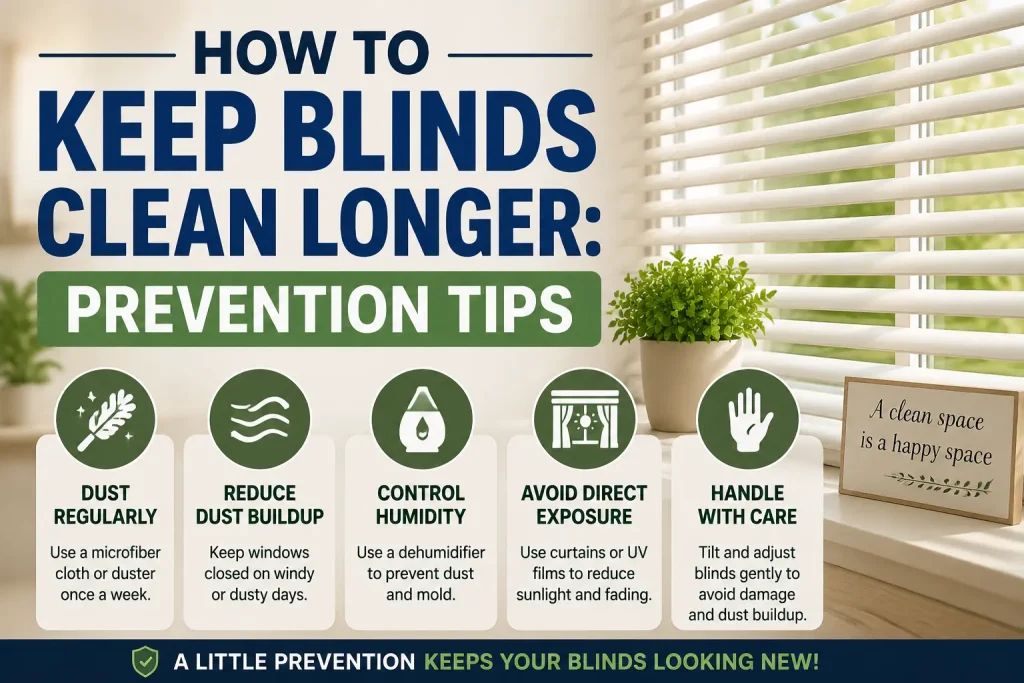
Cleaning is easier when you reduce how fast your blinds get dirty in the first place.
- Dust your blinds before vacuuming the floor. Dislodged dust falls down and gets picked up when you vacuum.
- Keep windows closed on windy, dusty days. Open windows allow dust particles to settle directly on blind slats at a much faster rate.
- In kitchens, run the range hood fan while cooking to capture grease-laden steam before it reaches your blinds.
- In bathrooms, run the exhaust fan during and after every shower to reduce moisture that settles on blinds.
- If you have pets that sit in the window, place a soft mat or pet bed near the window to catch the bulk of their hair before it reaches the blinds.
- Avoid touching slats with bare hands frequently. Skin oils transfer to the surface and attract more dust.
- In dusty environments, a very light application of anti-static spray on hard slats after cleaning will slow re-accumulation significantly.
When to Replace Your Blinds Instead of Cleaning Them
Sometimes cleaning is simply not the answer. Here are the signs that it is time to replace your blinds rather than attempt another clean:
- Slats are bent, cracked, or broken and cannot be straightened – bent slats block light unevenly and look untidy regardless of how clean they are.
- Fabric blinds have permanent stains that have not responded to cleaning – some dye transfers and grease stains are permanent.
- There is visible mold growth deep within cellular shades or fabric layers that cannot be fully reached or cleaned.
- The operating cord or mechanism is broken or frayed – this is both a functional and safety issue.
- The material has yellowed significantly from UV exposure and does not respond to cleaning – vinyl yellowing is a material degradation issue, not a dirt issue.
- The blind has a persistent musty smell even after thorough cleaning and drying – this often indicates mold inside the material structure that cannot be fully removed.
Frequently Asked Questions
Can I put my blinds in the washing machine?
Most blinds should not go in a washing machine. The agitation can bend slats, tangle cords, and damage mechanisms. Some lightweight fabric roller blinds may be washable if the manufacturer specifies it, but always check the care label first.
How do I clean blinds without taking them down?
Close the blinds flat, wipe each slat with a dry or damp microfiber cloth from left to right, then rotate and repeat on the other side. A vacuum with a soft brush attachment works well too. For fabric blinds, a vacuum with an upholstery attachment while they hang is the easiest in-place method.
What is the fastest way to clean dusty blinds?
Wear a dry microfiber glove and run your hand along the slats from top to bottom. This is faster than using a cloth because you can clean multiple slats at once. Follow up with a vacuum pass to catch any loosened dust.
Can I use a steam cleaner on blinds?
Steam cleaners work on some blind types but not others. They can be used on hard vinyl or aluminum blinds with caution – keep the steamer moving and do not hold it in one spot. Never use a steam cleaner on wood, bamboo, or most fabric blinds, as the heat and moisture can cause warping, shrinking, or mold.
How do I stop blinds from getting dusty so fast?
The most effective method is to apply a very light coat of anti-static spray after cleaning. Static electricity on surfaces is what attracts airborne dust particles. Reducing the static charge slows down how fast dust settles.
Are there professional blind cleaning services?
Yes. Professional ultrasonic blind cleaning services exist in most cities. They use high-frequency sound waves in a water bath to clean every surface of a blind simultaneously without manual scrubbing. This is especially effective for delicate or heavily soiled blinds and is worth considering for high-value window treatments.
Final Word
Cleaning blinds does not have to be a dreaded chore. With the right method for your specific blind type, the right tools, and a simple routine, you can keep every blind in your home looking fresh with very little time and effort.
The key is matching your cleaning method to your material. Aluminum and vinyl blinds can handle water and deeper cleaning. Real wood and bamboo need gentle handling and minimal moisture. Fabric blinds need patience and spot treatment. Motorized blinds need dry methods only. And all blinds benefit from regular, light maintenance that prevents serious buildup from ever developing.
Start with a quick dust this week, note which blinds need more attention, and build the habit from there. Your air quality, your home’s appearance, and the lifespan of your window treatments will all be better for it.
You May Also Like It: