
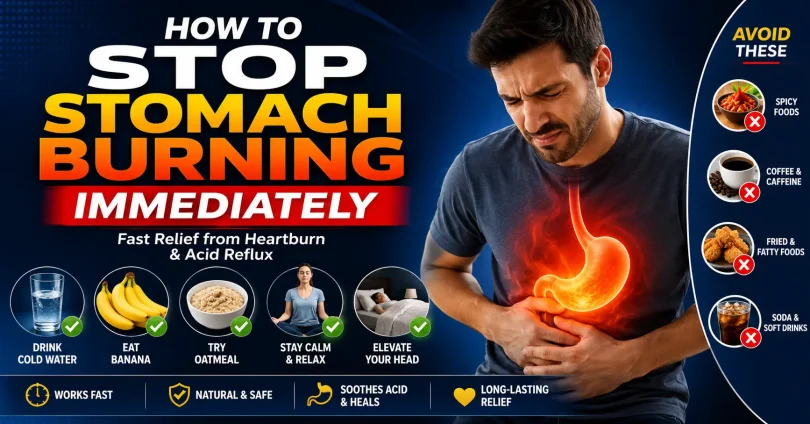
How to Stop Stomach Burning Immediately. A burning sensation in your stomach can hit at the worst times. It might flare up after a spicy meal, wake you up at night, or linger for hours and ruin your entire day. If you want fast relief and long-term control, this guide covers everything your competitors miss: what actually causes the burn, how to stop it right now, and how to make sure it stays gone.
What Is Stomach Burning and Why Does It Happen?
Stomach burning is not a single condition. It is a symptom that can come from several different sources inside your digestive system. Understanding the source is the first step toward choosing the right remedy.
When you eat, your stomach produces hydrochloric acid to break down food. This acid is strong enough to damage tissue, which is why your stomach has a thick protective mucous lining. When that lining becomes weakened, irritated, or overwhelmed, the acid causes the burning feeling you experience.
The most common sources of stomach burning include:
- Acid reflux or GERD: Stomach acid travels back up into the esophagus, causing a burning feeling behind the breastbone or in the upper stomach.
- Gastritis: Inflammation of the stomach lining, often caused by H. pylori bacteria, overuse of painkillers, or alcohol.
- Peptic ulcers: Open sores in the stomach or upper small intestine that cause a deep, gnawing burn, especially on an empty stomach.
- Functional dyspepsia: Burning and discomfort in the upper abdomen with no clear structural cause. Very common and often triggered by stress, diet, or eating habits.
- Hiatal hernia: When part of the stomach pushes up through the diaphragm, acid reflux becomes more frequent and harder to control.
- Food intolerances: Lactose, gluten, or high-fat foods can irritate the gut lining and cause burning in some people.
One important distinction most articles skip: upper stomach burning and lower stomach burning are different. Upper stomach burning, just below the ribcage, is most often acid-related. Lower stomach burning, around or below the navel, is more likely related to the intestines, food intolerances, or irritable bowel syndrome.
How to Stop Stomach Burning Immediately: Step-by-Step Relief
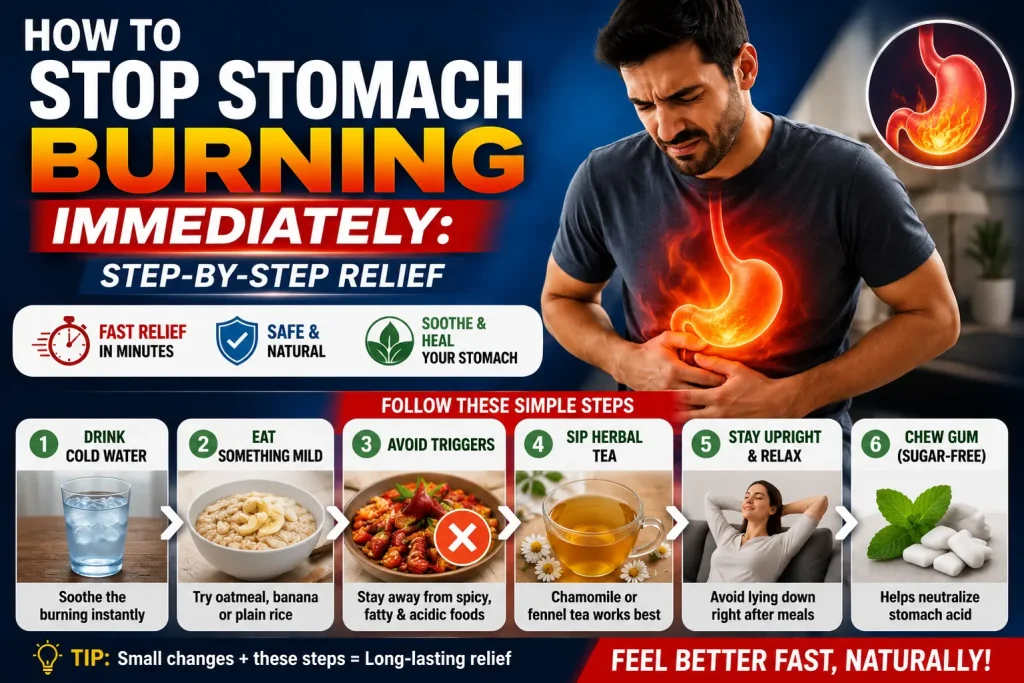
The fastest relief depends on what is triggering the burn. Use this time-based approach to act quickly and effectively.
In the First 5 Minutes
These are your fastest-acting options:
- Drink a glass of cold or room-temperature water: Water dilutes stomach acid and temporarily reduces the burning intensity. Avoid gulping. Sip slowly over one to two minutes.
- Sit upright or stand up: Gravity keeps acid in the stomach. Lying down immediately after a meal makes acid reflux worse. If you are already lying down, prop your upper body up with pillows.
- Loosen tight clothing: Waistbands, belts, and tight pants increase abdominal pressure, which pushes acid upward. Loosening them provides instant physical relief.
- Stop eating: If the burning starts mid-meal, stop. Eating more stretches the stomach further and produces more acid.
Within 15 to 30 Minutes: Home Remedies That Work
These natural options work best when the burning is mild to moderate:
Baking Soda (Sodium Bicarbonate)
Mix half a teaspoon of baking soda in 4 to 6 ounces of water and drink it slowly. Baking soda is an alkaline compound that neutralizes stomach acid almost immediately. You may feel some bloating as the acid and baking soda react and release gas. Do not use this more than three times per day or for more than two weeks in a row. People with high blood pressure or kidney disease should avoid this remedy.
Aloe Vera Juice
Aloe vera has natural anti-inflammatory compounds that soothe the esophagus and stomach lining. Drink around 2 to 4 ounces of pure, food-grade aloe vera juice. Look for products with the aloin removed, as aloin acts as a laxative. Aloe vera works within 20 to 30 minutes for most people.
Cold Milk
Cold milk neutralizes acid temporarily due to its alkaline nature and helps coat the stomach lining. This works well for mild heartburn or gastritis. However, the fat and protein in milk can stimulate more acid production after the initial relief wears off, so this is best used as a bridge while you prepare a longer-lasting remedy.
Ginger Tea
Ginger contains compounds called gingerols and shogaols that reduce stomach inflammation and help regulate digestive motility. Steep a thin slice of fresh ginger in hot water for 5 to 10 minutes. Sip slowly. Avoid adding lemon, as citrus can worsen acid symptoms. Ginger is particularly effective if your burning comes with nausea.
Chew Sugar-Free Gum
This is one of the most overlooked remedies. Chewing gum stimulates saliva production. Saliva is naturally alkaline and acts as a buffer against stomach acid in the esophagus. A 2005 study published in the Journal of Dental Research found that chewing gum for 30 minutes after a meal reduced acid reflux significantly. Choose a sugar-free variety to avoid triggering more acid production.
Fennel Seeds
Chewing on a small pinch of fennel seeds after a meal is a traditional digestive remedy used across South Asia and the Mediterranean. Fennel contains anethole, a compound that relaxes the smooth muscle in the gastrointestinal tract, reduces spasms, and eases bloating and burning. It works especially well for post-meal burning caused by gas.
Apple Cider Vinegar (Use with Caution)
Some people find relief by mixing one teaspoon of raw apple cider vinegar in a glass of water before meals. The theory is that low stomach acid (not excess acid) causes some people’s reflux, and adding acid helps. However, the evidence is mostly anecdotal and apple cider vinegar can irritate an already inflamed stomach lining. Do not try this if you have confirmed GERD, ulcers, or severe gastritis.
Over-the-Counter Medications That Provide Fast Relief
If home remedies are not enough, over-the-counter options are safe and effective for most people:
- Antacids (Tums, Rolaids, Gaviscon): These neutralize existing stomach acid and provide relief within 5 to 15 minutes. They are best for occasional or mild burning. Antacids containing calcium carbonate work quickly but may cause rebound acid production if used frequently. Antacids containing magnesium work a bit slower but are gentler. Gaviscon also creates a foam barrier on top of stomach contents to physically block acid from reaching the esophagus.
- H2 Blockers (Famotidine, Ranitidine equivalents): These reduce the amount of acid your stomach produces over the next 6 to 12 hours. They take longer to kick in (about 30 to 60 minutes) but provide longer-lasting relief than antacids. Good for burning that tends to last through the evening.
- Proton Pump Inhibitors or PPIs (Omeprazole, Lansoprazole): PPIs block acid production for up to 24 hours. They are most effective when taken 30 to 60 minutes before your first meal of the day. They take a few days of consistent use to reach full effect, so they are not ideal for one-off immediate relief, but are excellent if burning is a daily or near-daily problem.
Note: Antacids and H2 blockers can interfere with the absorption of certain medications. If you take other prescription drugs, speak to a pharmacist before adding OTC acid remedies.
Stomach Burning on an Empty Stomach: A Special Case
Many articles ignore this scenario, but burning when your stomach is empty is a completely different experience. It often signals peptic ulcer disease rather than simple acid reflux.
When you have not eaten for several hours, stomach acid has nothing to work on. In people with ulcers or H. pylori infections, this causes a distinct gnawing or burning pain, usually in the upper middle abdomen, that is often relieved by eating a small amount of food.
If you notice your burning is worse before meals and better after eating, you should see a doctor. H. pylori is easily diagnosed with a breath test, stool test, or endoscopy and is treatable with a short course of antibiotics.
For immediate relief on an empty stomach:
- Eat a small, bland snack: Plain crackers, a piece of toast, or a banana can buffer acid quickly.
- Avoid acidic drinks: Coffee, orange juice, and carbonated sodas make empty-stomach burning significantly worse.
- Take an antacid: This is one of the most appropriate uses for an antacid, as it neutralizes the acid with nothing else in the stomach to do so.
Nighttime Stomach Burning: Why It Gets Worse and How to Stop It
Stomach burning that worsens at night or when you lie down is one of the most disruptive digestive problems. This happens for two main reasons:
- Gravity no longer keeps acid in the stomach when you are horizontal.
- Saliva production drops significantly during sleep, removing one of your body’s natural acid buffers.
How to manage nighttime burning effectively:
- Eat your last meal at least 3 hours before bed. This is the most important rule for nighttime reflux sufferers.
- Elevate the head of your bed by 6 to 8 inches using bed risers or a wedge pillow. Stacking regular pillows does not work because it bends your body at the waist and can actually increase abdominal pressure. A proper wedge pillow elevates your entire upper body.
- Sleep on your left side. Research shows that sleeping on your left side keeps the stomach below the esophagus due to the angle of the stomach’s anatomy. Sleeping on your right side or back is associated with more nighttime acid reflux episodes.
- Avoid alcohol and caffeine in the evening. Both relax the lower esophageal sphincter, the valve between the stomach and esophagus, making it easier for acid to escape upward.
- Take a nighttime H2 blocker. Famotidine taken 30 minutes before bed suppresses overnight acid production.
The Best and Worst Foods for Stomach Burning
Foods That Soothe Stomach Burning
- Bananas: Naturally alkaline and coating. They are one of the best quick foods for immediate relief.
- Oatmeal: Absorbs acid and provides a gentle, filling buffer. Excellent for breakfast if mornings are your worst time.
- Boiled or baked potatoes (plain): Low in acid, easy to digest, and filling without triggering acid production.
- Ginger: Anti-inflammatory and pro-motility. Add it to meals or drink it as tea.
- Lean proteins: Skinless chicken, turkey, and fish are low in fat and easy on the stomach.
- Melons and non-citrus fruits: Cantaloupe, honeydew, and watermelon are alkaline and generally well tolerated.
- Herbal teas (chamomile, licorice root, slippery elm): These have soothing and anti-inflammatory effects on the gut lining.
Foods That Make Stomach Burning Worse
- Spicy foods: Capsaicin directly irritates the stomach lining and delays gastric emptying.
- Tomatoes and tomato-based sauces: Highly acidic and a very common trigger for GERD symptoms.
- Citrus fruits and juices: Oranges, lemons, grapefruits, and limes lower the pH in the stomach and esophagus.
- Fried and fatty foods: High-fat meals slow stomach emptying and increase reflux risk.
- Chocolate: Contains caffeine, theobromine, and fat, all of which relax the lower esophageal sphincter.
- Carbonated drinks: The bubbles expand in the stomach, increasing pressure and pushing acid upward.
- Coffee and strong tea: Even decaf coffee is acidic and can irritate the stomach lining.
- Alcohol: Directly damages the stomach lining, increases acid production, and relaxes the esophageal sphincter.
- Mint and peppermint: Though often marketed as digestive aids, mint can relax the esophageal sphincter and worsen acid reflux.
Lifestyle Changes That Prevent Stomach Burning Long-Term
Treating stomach burning in the moment is necessary, but permanent relief requires addressing the root causes. These proven lifestyle changes reduce burning frequency and severity over time.
1. Eat Smaller, More Frequent Meals
Large meals stretch the stomach, which increases pressure on the lower esophageal sphincter and promotes acid escape. Aim for 4 to 5 smaller meals spread through the day rather than 2 to 3 large ones. Stop eating when you are about 80 percent full.
2. Maintain a Healthy Weight
Excess body fat, especially around the abdomen, increases intra-abdominal pressure and pushes acid upward. Even a modest weight reduction of 5 to 10 percent of body weight can significantly reduce reflux symptoms in overweight individuals.
3. Quit Smoking
Nicotine directly weakens the lower esophageal sphincter and reduces saliva production. People who smoke are two to three times more likely to experience chronic GERD than non-smokers.
4. Reduce Stress Actively
Stress does not just affect your mood. It increases stomach acid secretion, slows digestive motility, and makes you more sensitive to pain signals from the gut. Proven strategies include diaphragmatic breathing, progressive muscle relaxation, daily walks, and adequate sleep. Even 10 minutes of daily mindfulness practice has been shown to reduce functional dyspepsia symptoms.
5. Review Your Medications
NSAIDs such as ibuprofen and aspirin damage the stomach’s protective mucous lining with regular use. Bisphosphonates (used for osteoporosis), some antibiotics, and certain blood pressure medications can also cause gastric irritation. If you take any of these regularly and experience burning, speak to your doctor. In many cases, switching to a different medication or taking it with food is sufficient.
6. Chew Food Thoroughly
Poorly chewed food puts more work on your stomach and requires more acid to break it down. Taking 20 to 30 chews per bite is not an exaggeration. Eating slowly also prevents swallowing excess air, which reduces bloating and belching.
7. Stay Hydrated Throughout the Day
Adequate hydration supports healthy mucous production in the stomach lining and aids digestion. However, avoid drinking large amounts of water during meals, as this dilutes digestive enzymes and can slow gastric emptying. Sip water between meals rather than with food.
Stomach Burning During Pregnancy: What to Know
Heartburn and stomach burning affect up to 80 percent of pregnant women, particularly in the second and third trimesters. Two main factors cause this:
- The hormone progesterone relaxes the lower esophageal sphincter throughout pregnancy.
- The growing uterus puts upward pressure on the stomach.
Safe options during pregnancy include:
- Calcium carbonate antacids (Tums): Generally considered safe when used occasionally. Discuss with your OB before regular use.
- Eating smaller, more frequent meals and avoiding lying down after eating are especially important in pregnancy.
- Elevating the head of the bed is safe and very effective.
- Ginger tea is safe during pregnancy and helps with nausea as well.
Avoid baking soda during pregnancy because of its high sodium content. PPIs and H2 blockers should only be used if recommended by your doctor during pregnancy.
When Stomach Burning Is a Medical Emergency
Most stomach burning is uncomfortable but not dangerous. However, some symptoms alongside burning indicate a serious condition that requires immediate medical attention.
Go to an emergency room or call emergency services if you experience:
- Vomiting blood or material that looks like coffee grounds
- Black, tarry, or bloody stools
- Sudden, severe, or crushing chest pain
- Pain radiating to the jaw, left arm, or back (possible heart attack)
- Difficulty swallowing, especially if it has worsened over time
- Significant unintentional weight loss
- Persistent vomiting that prevents eating or drinking
- Jaundice (yellowing of the skin or eyes)
See a doctor within a few days if your burning has lasted more than two weeks, has not responded to OTC treatments, returns immediately after stopping medication, or began after starting a new drug.
How to Tell If Your Stomach Burning Is Actually a Heart Problem
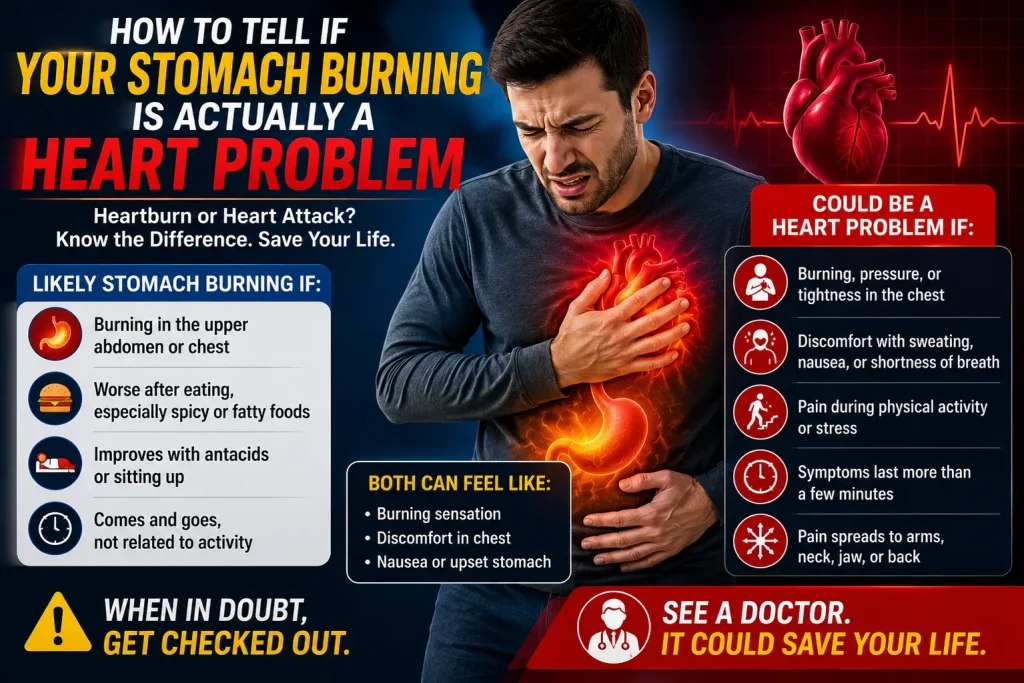
This is one of the most important distinctions to make, and most competitor articles do not address it clearly enough.
Heartburn and heart attack can feel very similar. Both may cause a burning or pressure sensation in the chest. The key differences to watch for:
- Heartburn: Usually starts after eating, tends to get worse when lying down, often accompanied by a sour taste in the mouth, and typically relieved by antacids within 15 to 30 minutes.
- Heart attack: May come on during physical exertion or at rest with no relation to meals, is often accompanied by shortness of breath, sweating, nausea, lightheadedness, or pain that radiates to the arm, neck, or jaw. Antacids provide no relief.
If you are not sure, err on the side of caution. Call emergency services. A heart attack is far more dangerous than a missed dose of antacid.
Frequently Asked Questions
What stops stomach burning the fastest?
Drinking a glass of water and taking a calcium carbonate antacid such as Tums provides the fastest relief for most people, usually within 5 to 15 minutes. Sitting upright helps immediately as well.
Is it normal for my stomach to burn every day?
No. Daily stomach burning that does not respond to dietary changes warrants a visit to a doctor. It may indicate GERD, gastritis, or peptic ulcer disease, all of which are treatable.
Can stress alone cause stomach burning?
Yes. Stress increases stomach acid production, alters gut motility, and heightens pain sensitivity. Many people with functional dyspepsia find that stress is their primary trigger.
Should I take antacids before or after meals?
For acid reflux symptoms that appear after eating, take antacids 30 to 60 minutes after meals for best effect. For burning before meals or on an empty stomach, take them immediately. H2 blockers are most effective when taken 30 to 60 minutes before eating.
Is milk good for stomach burning?
Cold milk provides temporary relief because of its alkaline nature, but the fat and protein in milk can stimulate more acid production shortly after. It is a short-term fix, not a long-term solution.
Why is my stomach burning worse at night?
Lying down removes gravity’s help in keeping acid in the stomach. Saliva production also drops at night. Elevating your head of bed by 6 to 8 inches and eating your last meal at least 3 hours before sleep are the most effective solutions.
When should I see a doctor for stomach burning?
See a doctor if burning lasts more than two weeks, does not improve with OTC remedies, is getting worse, or occurs alongside any alarm symptoms such as weight loss, difficulty swallowing, or blood in stool.
Quick-Reference Summary
If you are in pain and want to act immediately, follow this sequence:
- Sit up straight and loosen any tight clothing.
- Sip a glass of cold or room-temperature water slowly.
- If symptoms are mild, chew sugar-free gum for 20 to 30 minutes.
- Try a home remedy: baking soda water, cold milk, aloe vera juice, or ginger tea.
- Take an antacid if home remedies are not providing enough relief.
- For burning that is severe, persistent, or accompanied by any emergency symptoms, seek medical care immediately.
You May Also Like It:
How to Download RC Book Online