
Who Are You Meaning in Marathi
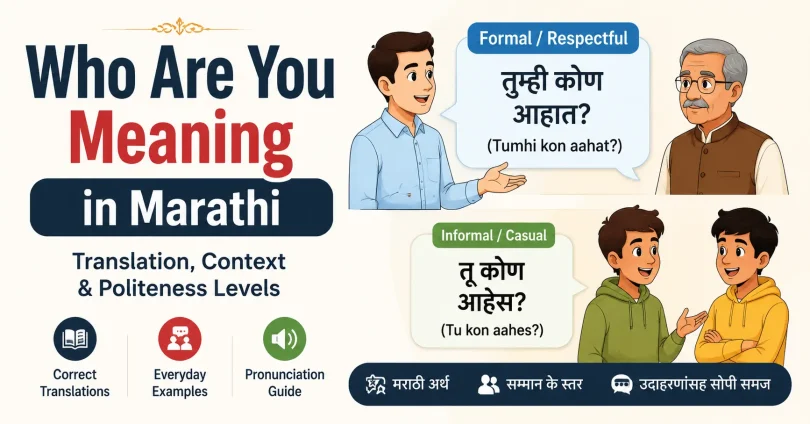
The English question “Who are you?” translates to “तू कोण आहेस?” (Tū koṇ āhes?) in casual Marathi and “तुम्ही कोण आहात?” (Tumhī koṇ āhāt?) in formal or respectful Marathi. Written in the Devanagari script, the core word कोण (koṇ) represents “who.”
Summary:
- Casual / Informal: तू कोण आहेस? (Tū koṇ āhes?)
- Respectful / Formal: तुम्ही कोण आहात? (Tumhī koṇ āhāt?)
- Core Meaning: “Who” = कोण (koṇ) | “You” = तू (tū) or तुम्ही (tumhī)
Politeness & Social Hierarchy in Marathi
Marathi grammar depends heavily on social hierarchy, age, and professional hierarchy. Choosing between informal and formal phrasing prevents awkward social slip-ups.
1. Casual Phrasing: तू कोण आहेस? (Tū koṇ āhes?)
Use this expression exclusively with:
- Friends and peers of similar age.
- Children or younger family members.
- Close relatives where casual conversation is natural.
Using “तू” (tū) with an elder, employer, or stranger sounds blunt or disrespectful in Maharashtrian culture.
2. Formal Phrasing: तुम्ही कोण आहात? (Tumhī koṇ āhāt?)
Use this structure when addressing:
- Elders, teachers, and senior colleagues.
- Strangers over the phone or at your front door.
- Groups of two or more people.
In Marathi, “तुम्ही” (tumhī) functions like the polite plural pronoun, similar to “Sie” in German or “Vous” in French.
Contextual Variations & Real-World Examples
Depending on how you communicate (phone call, unexpected visitor, or formal intro), native speakers adjust their phrasing.
| Context | English Phrase | Marathi Translation | Script (Devanagari) |
| Phone Call (Unknown Caller) | “Who is speaking?” | Bolṇāre koṇ āhāt? | बोलणारे कोण आहात? |
| Doorway / Visitor | “Who are you looking for?” | Tumhālā koṇ pahije? | तुम्हाला कोण पाहिजे? |
| Identity Verification | “May I know who you are?” | Āpaṇ koṇ āhāt? | आपण कोण आहात? |
| Plural / Group | “Who are you all?” | Tumhī sarva koṇ āhāt? | तुम्ही सर्व कोण आहात? |
Pro Tip: Using “आपण” (āpaṇ) instead of “तुम्ही” (tumhī) adds an extra tier of formal polish. It is ideal for interviews, corporate settings, or addressing dignitaries.
Pronunciation Breakdown
To speak naturally without sounding mechanical, break the phrases down phonetically:
- Tū (तू): Sounds like “Too” with a soft ‘t’ sound (as in Spanish “tu”).
- Tum-hī (तुम्ही): Emphasize the soft “m-h” blend: Toom-hee.
- Koṇ (कोण): Hard “N” sound produced by curling your tongue against the roof of the mouth (retroflex ‘ण’).
- Āhes / Āhāt (आहेस / आहात): Ah-hes for singular casual; Ah-haat for respectful singular or plural.
Common Mistakes to Avoid
- Mixing Pronouns and Verbs: Combining “तू” with “आहात” (Tū koṇ āhāt) creates a grammatical error. Always pair तू with आहेस and तुम्ही with आहात.
- Ignoring Retroflex Sounds: Pronouncing कोण like the English word “cone” sounds unnatural. Let the tongue curl back slightly for the final “ṇ”.
- Overusing the Casual Form: Defaulting to “तू” with strangers in Maharashtra can cause friction. When in doubt, start with “तुम्ही”.
Frequently Asked Questions
How do I ask “Who are you?” on a phone call in Marathi?
Instead of asking “Tumhī koṇ āhāt?”, native speakers prefer saying “Aapṇ koṇ bolat āhāt?” (आपण कोण बोलत आहात?), which means “Who is speaking, please?”
What is the difference between “कोण” (koṇ) and “काय” (kāy)?
कोण (koṇ) means “who” and refers exclusively to people. काय (kāy) means “what” and applies to objects, actions, or concepts.
How do I reply if someone asks me “तुम्ही कोण आहात?”
You can state your name followed by “āhe” (आहे). For example: “Mī Rahul āhe” (मी राहुल आहे) means “I am Rahul.”