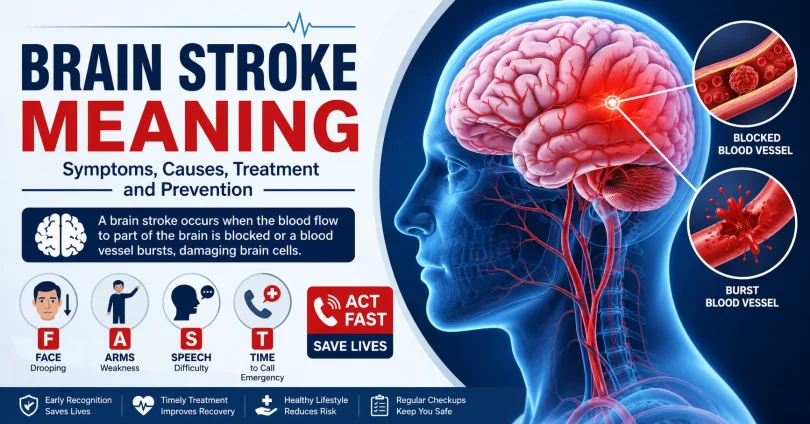
A brain stroke is a life-threatening medical emergency that happens when the blood supply to part of the brain is interrupted or when a blood vessel in the brain bursts. Without enough oxygen and nutrients, brain cells begin to die within minutes. Quick treatment can save lives and reduce the risk of permanent brain damage.
Many people search for the Brain Stroke Meaning because they want to understand what it is, why it happens, and how to recognize its warning signs. Knowing the symptoms and acting immediately can make a significant difference in recovery.
In this comprehensive guide, you’ll learn everything about brain stroke, including its meaning, symptoms, causes, risk factors, diagnosis, treatment, prevention, and frequently asked questions.
What Is Brain Stroke?
A brain stroke occurs when blood flow to the brain is blocked or reduced. Since the brain depends on a continuous supply of oxygen-rich blood, even a short interruption can damage brain tissue.
Brain stroke is also known simply as a stroke or cerebrovascular accident (CVA).
There are two major types:
- Ischemic stroke
- Hemorrhagic stroke
Another related condition is the Transient Ischemic Attack (TIA), often called a mini stroke.
Brain Stroke Meaning in Simple Words
In simple language:
- Brain stroke means a condition where part of the brain stops receiving enough blood or starts bleeding, causing brain cells to die.
It is an emergency that requires immediate medical attention.
Types of Brain Stroke
1. Ischemic Stroke
This is the most common type, accounting for nearly 85 percent of all strokes.
It happens when:
- A blood clot blocks a brain artery.
- Fatty deposits narrow blood vessels.
- Blood flow is restricted.
Common causes include:
- High cholesterol
- Heart disease
- Blood clots
- Diabetes
2. Hemorrhagic Stroke
A hemorrhagic stroke occurs when a blood vessel in the brain ruptures.
Causes include:
- High blood pressure
- Brain aneurysm
- Head injury
- Blood-thinning medications
Bleeding inside the brain increases pressure and damages surrounding brain tissue.
3. Transient Ischemic Attack (TIA)
TIA is often called a mini stroke because symptoms disappear within a few minutes or hours.
However, it should never be ignored because it can be an early warning sign of a major stroke.
Brain Stroke Symptoms
Recognizing symptoms early can save a life.
Common symptoms include:
- Sudden weakness on one side of the body
- Facial drooping
- Difficulty speaking
- Slurred speech
- Confusion
- Sudden vision problems
- Severe headache
- Dizziness
- Loss of balance
- Difficulty walking
- Numbness in the face, arm, or leg
Remember FAST
Doctors recommend remembering the word FAST.
F = Face
Ask the person to smile.
Does one side of the face droop?
A = Arms
Ask them to raise both arms.
Does one arm drift downward?
S = Speech
Ask them to repeat a simple sentence.
Is speech slurred or unusual?
T = Time
If you notice any of these signs, call emergency medical services immediately.
Causes of Brain Stroke
Several conditions can lead to a stroke.
Common causes include:
- High blood pressure
- High cholesterol
- Diabetes
- Smoking
- Obesity
- Heart disease
- Blood clotting disorders
- Excessive alcohol use
- Drug abuse
- Aging
Risk Factors
Some risk factors cannot be changed.
Non-modifiable Risk Factors
- Age over 55
- Family history
- Previous stroke
- Gender
- Genetics
Modifiable Risk Factors
- High blood pressure
- Smoking
- Diabetes
- Obesity
- Physical inactivity
- Poor diet
- High cholesterol
- Excess alcohol consumption
How Is Brain Stroke Diagnosed?
Doctors use several tests to confirm a stroke.
These include:
- Physical examination
- CT Scan
- MRI Scan
- Blood tests
- Electrocardiogram (ECG)
- Carotid ultrasound
- Echocardiogram
- CT angiography
Early diagnosis helps doctors choose the best treatment quickly.
Brain Stroke Treatment
Treatment depends on the type of stroke.
Treatment for Ischemic Stroke
Doctors may use:
- Clot-dissolving medicines
- Mechanical thrombectomy
- Blood thinners
- Antiplatelet medications
Quick treatment within the first few hours provides the best outcome.
Treatment for Hemorrhagic Stroke
Treatment may include:
- Blood pressure control
- Surgery
- Repairing damaged blood vessels
- Managing brain swelling
Stroke Rehabilitation
Recovery often requires rehabilitation.
This may involve:
- Physical therapy
- Speech therapy
- Occupational therapy
- Psychological counseling
- Nutritional guidance
Many patients recover partially or fully with proper rehabilitation.
Complications of Brain Stroke
Without treatment, stroke can cause:
- Paralysis
- Memory loss
- Speech problems
- Difficulty swallowing
- Vision loss
- Depression
- Chronic pain
- Permanent disability
How to Prevent Brain Stroke
Many strokes are preventable.
Healthy habits include:
- Control blood pressure
- Exercise regularly
- Eat fruits and vegetables
- Maintain healthy weight
- Quit smoking
- Limit alcohol
- Control diabetes
- Manage cholesterol
- Reduce stress
- Get regular health checkups
Foods That Support Brain Health
A healthy diet helps reduce stroke risk.
Recommended foods include:
- Leafy green vegetables
- Whole grains
- Fish rich in omega-3
- Nuts
- Fruits
- Beans
- Olive oil
- Low-fat dairy products
Limit:
- Salt
- Fried foods
- Sugary drinks
- Processed meat
- Trans fats
When Should You See a Doctor?
Seek emergency medical care immediately if you notice:
- Sudden numbness
- Sudden confusion
- Severe headache
- Vision loss
- Difficulty walking
- Trouble speaking
- Loss of consciousness
Never wait for symptoms to improve.
Brain Stroke Meaning in Different Indian Languages
Many people search for the meaning of brain stroke in regional languages.
Brain Stroke Meaning in Hindi
ब्रेन स्ट्रोक का अर्थ: मस्तिष्क में रक्त प्रवाह रुक जाना या मस्तिष्क की रक्त वाहिका फट जाना।
Brain Stroke Meaning in Marathi
ब्रेन स्ट्रोक म्हणजे: मेंदूकडे जाणारा रक्तपुरवठा थांबणे किंवा रक्तवाहिनी फुटणे.
Brain Stroke Meaning in Punjabi
ਬ੍ਰੇਨ ਸਟ੍ਰੋਕ ਦਾ ਅਰਥ: ਦਿਮਾਗ ਨੂੰ ਖੂਨ ਦੀ ਸਪਲਾਈ ਰੁਕ ਜਾਣਾ ਜਾਂ ਦਿਮਾਗ ਵਿੱਚ ਖੂਨ ਦੀ ਨਾੜੀ ਫਟ ਜਾਣਾ।
Brain Stroke Meaning in Tamil
மூளை ஸ்ட்ரோக் என்பது: மூளைக்கு செல்லும் இரத்த ஓட்டம் தடைபடுதல் அல்லது இரத்த நாளம் வெடித்தல்.
Brain Stroke Meaning in Gujarati
બ્રેઇન સ્ટ્રોકનો અર્થ: મગજમાં રક્તપ્રવાહ બંધ થવો અથવા રક્તવાહિની ફાટી જવી.
Brain Stroke Meaning in Kannada
ಬ್ರೇನ್ ಸ್ಟ್ರೋಕ್ ಅರ್ಥ: ಮೆದುಳಿಗೆ ರಕ್ತ ಹರಿವು ನಿಲ್ಲುವುದು ಅಥವಾ ರಕ್ತನಾಳ ಸಿಡಿಯುವುದು.
Brain Stroke Meaning in Telugu
బ్రెయిన్ స్ట్రోక్ అర్థం: మెదడుకు రక్తప్రసరణ ఆగిపోవడం లేదా రక్తనాళం పగలడం.
Brain Stroke Meaning in Malayalam
ബ്രെയിൻ സ്ട്രോക്കിന്റെ അർത്ഥം: മസ്തിഷ്കത്തിലേക്കുള്ള രക്തപ്രവാഹം തടസ്സപ്പെടുകയോ രക്തക്കുഴൽ പൊട്ടുകയോ ചെയ്യുന്നതാണ്.
Frequently Asked Questions
What is the meaning of brain stroke?
Brain stroke means the interruption of blood flow to the brain or bleeding inside the brain, leading to damage or death of brain cells.
Is brain stroke dangerous?
Yes. A stroke is a medical emergency that can cause permanent disability or death if not treated immediately.
What causes a brain stroke?
Common causes include high blood pressure, blood clots, diabetes, smoking, high cholesterol, heart disease, and ruptured blood vessels.
Can a person recover from a brain stroke?
Many people recover partially or fully with early treatment and rehabilitation. Recovery depends on the severity of the stroke and how quickly treatment begins.
What are the first warning signs of a stroke?
The first warning signs often include facial drooping, arm weakness, slurred speech, sudden confusion, vision problems, dizziness, or severe headache.
What is the FAST test?
FAST stands for:
- Face drooping
- Arm weakness
- Speech difficulty
- Time to call emergency services
Can young people get brain strokes?
Yes. Although strokes are more common in older adults, younger people can also experience strokes due to heart disease, blood disorders, lifestyle factors, or certain medical conditions.
Can stress cause a stroke?
Stress alone does not directly cause a stroke, but chronic stress can contribute to high blood pressure and unhealthy habits that increase stroke risk.
Which foods help prevent stroke?
A diet rich in vegetables, fruits, whole grains, fish, nuts, and healthy fats can lower stroke risk.
Is brain stroke preventable?
Many strokes are preventable by controlling blood pressure, exercising regularly, eating a healthy diet, quitting smoking, managing diabetes, and maintaining a healthy weight.
Conclusion
Understanding the Brain Stroke Meaning is essential because every minute counts during a stroke. Recognizing early symptoms, seeking emergency medical care, and managing risk factors can significantly improve survival and recovery.
Adopting a healthy lifestyle, controlling blood pressure, avoiding smoking, staying physically active, and following your doctor’s advice are among the most effective ways to reduce your risk. If you or someone around you experiences sudden weakness, speech difficulty, facial drooping, or other signs of a stroke, seek emergency medical attention immediately. Early intervention can save brain function, reduce long-term disability, and save lives.