
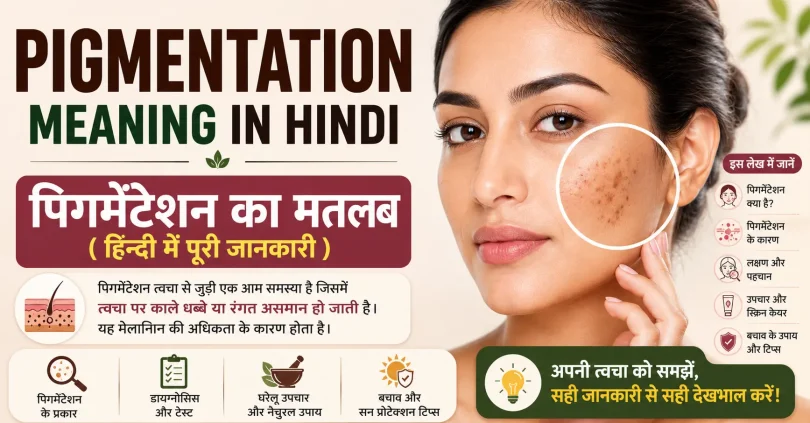
Pigmentation Meaning in Hindi:
In Hindi, pigmentation is called “झाइयां” (Jhaiyan) or “त्वचा का रंग बदलना” (Twacha ka rang badalna). It refers to uneven dark patches or spots on the skin caused by an overproduction of melanin, the natural pigment that determines skin color. While melanin protects cells from sun damage, excess production leads to localized darkening on the face, neck, or hands.
Primary Triggers Behind Excess Melanin Production
Dark spots rarely appear without a specific trigger. Skin cells produce extra pigment as a defense mechanism or in response to internal biochemical signals.
- UV Light Exposure: Sunlight stimulates melanocyte cells to produce extra pigment as a shield against radiation. Unprotected sun exposure is the primary reason dark patches darken further over time.
- Hormonal Fluctuations: Shifts in estrogen and progesterone during pregnancy, oral contraceptive use, or thyroid imbalances trigger widespread patches, a condition known locally as melasma or Chhaai.
- Post-Inflammatory Response: Any skin trauma, including active acne, aggressive scrubbing, insect bites, or chemical burns, leaves behind dark marks once healed.
- Nutritional Deficiencies: Low levels of Vitamin B12 and Vitamin D weaken cellular repair mechanisms, making dark spots more persistent.
Comparing the Main Types of Dark Patches
Different forms of skin darkening require distinct care strategies. Identifying the exact pattern helps determine the right ingredients.
| Type of Pigmentation | Local Name | Common Appearance | Main Trigger |
| Melasma | Chhaai / Jhaiyan | Symmetric brown patches on cheeks, forehead, and upper lip | Hormonal changes & UV exposure |
| Post-Inflammatory (PIH) | Muhase ke daag | Flat dark spots left after pimples or injuries heal | Skin inflammation or trauma |
| Sun Spots / Freckles | Dhoop ke nishan | Small, scattered brown spots on exposed areas | Prolonged UV radiation |
| Acanthosis Nigricans | Garadan ka kalapan | Thickened, velvety dark skin around the neck or armpits | Insulin resistance or metabolic issues |
Targeted Actives for Clearing Dark Marks
Clearing skin discoloration takes time. Modern dermatological routines focus on suppressing the enzyme responsible for pigment formation (tyrosinase) while accelerating cell turnover.
Top Topical Ingredients
- Alpha Arbutin (2%): Safely blocks melanin synthesis without bleaching healthy skin.
- Niacinamide (5%): Prevents the transfer of pigment from deeper layers to the skin’s surface.
- Azelaic Acid (10-15%): Calms active inflammation while targeting overactive pigment-producing cells.
- Vitamin C (L-Ascorbic Acid): Neutralizes free radical damage and brightens existing dull spots.
Daily Protective Measures
- Broad-Spectrum Sunscreen: Apply a sunscreen with SPF 50 and PA++++ rating every single morning, even indoors. Visible light from indoor bulbs can also trigger melasma.
- Gentle Cleansing: Avoid harsh scrub soaps or physical exfoliants. Friction triggers skin defense mechanisms, making dark patches darker.
Common Misconceptions to Avoid
Home remedies often promise instant fixes, but improper application can exacerbate the issue.
- Lemon Juice and Baking Soda: Raw lemon juice is highly acidic and phytophototoxic. Applying it before stepping into the sun causes severe chemical burns and leaves deeper dark spots.
- Over-Scrubbing: Scrubbing dark spots with rough pumice stones or loofahs will not scrub away the pigment. Pigment resides beneath the outer epidermal layer; physical friction only increases inflammation.
- Expecting Overnight Results: Skin cell turnover takes roughly 28 to 40 days. Any safe, dermatologically backed routine requires at least 8 to 12 weeks of consistent application to yield visible improvements.
Frequently Asked Questions
What is the exact Hindi term for pigmentation?
The most common terms used in Hindi are झाइयां (Jhaiyan) for facial patches and त्वचा का रंग गहरा होना (Twacha ka rang gahra hona) for general skin darkening.
Can diet alone cure dark spots on the face?
Diet alone cannot erase existing melanin deposits, but correcting Vitamin B12, C, and iron deficiencies prevents new spots from forming and improves overall cell renewal.
Is pigmentation permanent?
No, most forms of surface darkening (like post-acne marks and sun spots) fade over time with targeted topical care and strict sun protection. Deep dermal melasma may require continuous maintenance to keep from recurring.