
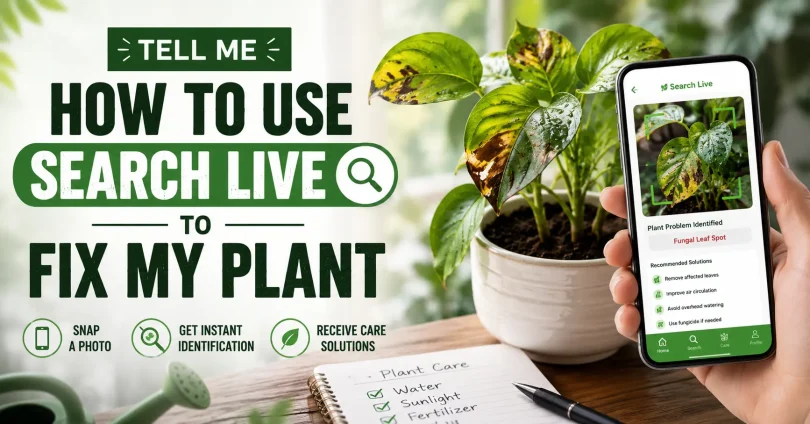
Tell Me How to Use Search Live to Fix My Plant. Indoor plants can brighten your home, improve air quality, and create a calming atmosphere. But if you have ever noticed yellow leaves, brown tips, drooping stems, or strange spots on your plants, you know how stressful plant care can feel.
The good news is that Google Search Live and Gemini Live make plant diagnosis much easier. Instead of guessing what is wrong with your plant, you can now use your phone’s camera to identify problems in real time and get instant suggestions.
In this complete guide, you will learn exactly how to use Search Live to fix your plant, what kinds of issues it can identify, when AI plant diagnosis works well, and when you should still consult a gardening expert.
Whether you are a complete beginner or someone who already owns several houseplants, this guide will help you keep your plants healthier and thriving.
What Is Search Live?
Search Live is an AI-powered visual search feature available through Google’s ecosystem, including Gemini Live and Google Lens Live.
It allows you to:
- Point your camera at a plant
- Ask questions in real time
- Receive instant plant care suggestions
- Identify diseases, pests, and stress symptoms
- Get step-by-step recovery advice
Unlike regular image search, Search Live allows back-and-forth conversations. You can continue asking questions while showing your plant through your camera.
For example:
- “Why are my plant leaves turning yellow?”
- “Is this fungus or overwatering?”
- “How do I save this snake plant?”
- “Should I repot this plant?”
- “Are these white bugs harmful?”
This makes plant troubleshooting much faster and easier for beginners.
How Does Search Live Identify Plant Problems?
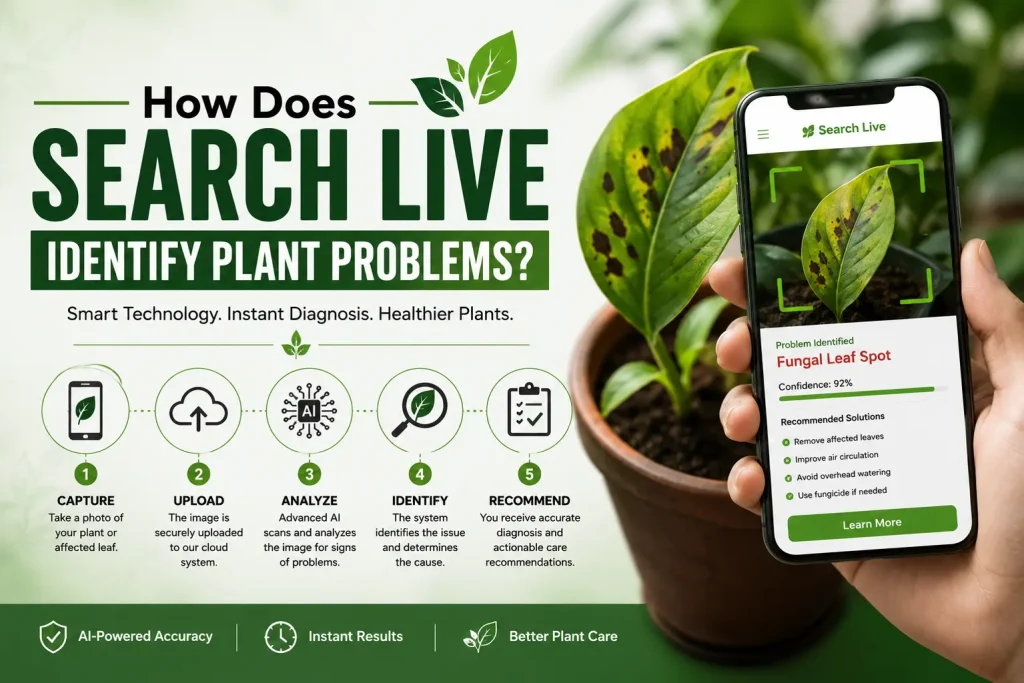
Search Live uses AI image recognition combined with plant databases and visual pattern analysis.
The AI looks at:
- Leaf color
- Spots or discoloration
- Stem condition
- Plant shape
- Soil appearance
- Pest visibility
- Wilting patterns
It compares these symptoms with millions of known plant issues and then suggests possible causes.
However, AI works best when:
- The image is clear
- Lighting is good
- The affected area is visible
- You ask specific questions
How to Use Search Live to Fix My Plant
Follow these steps carefully for the best results.
Step 1: Open Gemini Live or Search Live
You can use:
- Google Gemini app
- Google app with Lens
- Search Live feature on supported Android devices
Open the app and tap the “Live” or camera option.
Step 2: Point the Camera at Your Plant
Focus on the unhealthy part of the plant.
Show:
- Front and back of leaves
- Stem
- Soil
- Entire plant structure
If possible, slowly move around the plant to give the AI multiple angles.
Step 3: Ask a Clear Question
Instead of asking:
“What is wrong?”
Try specific questions like:
- “Why are these leaves turning yellow?”
- “What are these white spots?”
- “Why is my pothos drooping?”
- “Is this root rot?”
- “How do I treat these bugs?”
Specific questions usually produce better answers.
Step 4: Read the Diagnosis Carefully
Search Live may suggest:
- Overwatering
- Underwatering
- Root rot
- Nutrient deficiency
- Fungal infection
- Pest infestation
- Sunburn
- Low humidity
Do not blindly follow the first suggestion. Compare symptoms carefully.
Step 5: Ask Follow-Up Questions
This is where Search Live becomes powerful.
Ask questions like:
- “How often should I water it?”
- “Should I cut damaged leaves?”
- “Can this plant recover?”
- “What fertilizer should I use?”
- “How long will recovery take?”
Common Plant Problems Search Live Can Help Identify
Yellow Leaves
Yellow leaves are one of the most common indoor plant problems.
Possible Causes
- Overwatering
- Poor drainage
- Low sunlight
- Nutrient deficiency
- Root stress
- Natural aging
How Search Live Helps
Search Live analyzes:
- Yellowing pattern
- Leaf texture
- Soil moisture appearance
It can often tell whether the problem is caused by watering, lighting, or nutrient imbalance.
How to Fix It
- Water only when the top soil feels dry
- Improve drainage
- Move the plant near indirect sunlight
- Remove completely yellow leaves
- Use balanced fertilizer monthly
Brown Leaf Tips
Brown tips usually indicate environmental stress.
Common Causes
- Dry air
- Low humidity
- Excess fertilizer
- Tap water chemicals
- Heat stress
How to Fix It
- Mist leaves regularly
- Use filtered water if possible
- Avoid placing plants near heaters or AC vents
- Trim dead brown edges carefully
Wilting or Drooping Plants
Wilting does not always mean the plant needs water.
Possible Causes
- Overwatering
- Root rot
- Underwatering
- Heat stress
- Transplant shock
What Search Live Can Detect
Search Live can identify:
- Soil dryness
- Stem weakness
- Leaf collapse patterns
Recovery Tips
- Check soil moisture before watering
- Avoid watering on a fixed schedule
- Ensure proper drainage holes
- Repot if roots smell rotten
White Powder or Spots on Leaves
This often signals fungal disease or pests.
Common Issues
- Powdery mildew
- Mealybugs
- Spider mites
- Aphids
How to Treat It
- Isolate infected plants
- Spray neem oil weekly
- Improve airflow
- Remove heavily infected leaves
Black or Mushy Roots
This is usually root rot.
Root rot happens when roots stay wet too long and lose oxygen. Fungi then begin attacking weakened roots.
Warning Signs
- Constantly wet soil
- Bad smell from pot
- Yellow leaves
- Soft stems
- Plant collapse
What to Do
- Remove the plant from soil
- Cut black roots
- Repot in fresh soil
- Reduce watering
Why Overwatering Is More Dangerous Than Underwatering
Many beginners accidentally kill plants with kindness.
Plants need oxygen around their roots. When soil stays wet for too long:
- Oxygen disappears
- Roots suffocate
- Fungus grows rapidly
- Root cells begin dying
This is why overwatered plants often develop yellow leaves and droopy stems.
Most indoor plants recover better from slight dryness than constant wet soil.
Plant Problems Search Live May NOT Detect Properly
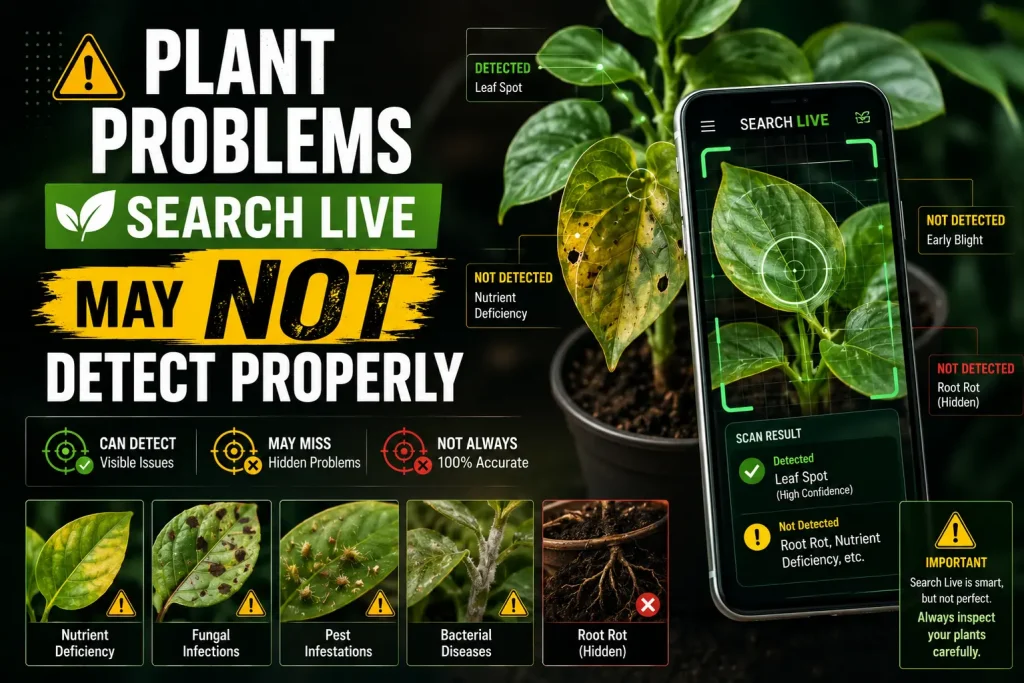
Search Live is useful, but it is not perfect.
AI can sometimes misdiagnose problems.
Issues That Are Hard to Detect
Hidden Root Rot
Damage below the soil is difficult for cameras to analyze.
Nutrient Deficiencies
Nitrogen, magnesium, and potassium deficiencies can look similar.
Early Fungal Infections
Some fungal problems begin internally before visible symptoms appear.
Water Quality Issues
High fluoride or salt content in water is difficult to detect visually.
Best Indoor Plants to Diagnose With Search Live
Search Live works especially well with common houseplants.
Easy Plants for AI Diagnosis
- Money Plant
- Pothos
- Snake Plant
- Peace Lily
- Monstera
- Spider Plant
- Aloe Vera
- Rubber Plant
- ZZ Plant
- Succulents
Because these plants are common, AI systems usually recognize them accurately.
How to Get More Accurate Search Live Results
Many people get poor results because of bad scanning habits.
Follow these tips:
Use Natural Lighting
Avoid dark rooms.
Show Multiple Angles
Scan leaves, stems, and soil.
Focus on Damaged Areas
Get close to the symptom.
Avoid Blurry Images
Hold the camera steady.
Ask One Question at a Time
Specific questions improve AI accuracy.
Before You Panic: Some Plant Changes Are Normal
Not every yellow leaf means disaster.
Sometimes plants naturally:
- shed old leaves
- adjust to new environments
- react to seasonal changes
For example:
- A newly purchased plant may drop leaves from stress
- Older bottom leaves naturally yellow over time
- Slight drooping after repotting is common
Observing patterns over several days is important.
Seasonal Plant Care Tips Most Articles Ignore
Different seasons affect indoor plants differently.
Summer
Common Problems
- Heat stress
- Fast soil drying
- Crispy leaves
Tips
- Water more carefully
- Increase humidity
- Avoid harsh afternoon sun
Winter
Common Problems
- Slow growth
- Overwatering risk
- Cold damage
Tips
- Reduce watering frequency
- Keep plants away from cold windows
- Avoid freezing drafts
Monsoon or Humid Seasons
Common Problems
- Fungus
- Mold
- Root rot
Tips
- Improve airflow
- Reduce watering
- Monitor soil moisture closely
Indoor Plant Recovery Timelines
Many people expect instant recovery.
Plants heal slowly.
Typical Recovery Times
| Problem | Estimated Recovery Time |
|---|---|
| Mild underwatering | 2–7 days |
| Overwatering stress | 1–3 weeks |
| Root rot recovery | 4–8 weeks |
| Nutrient deficiency | 2–4 weeks |
| Pest infestation | 1–6 weeks |
| Repotting shock | 1–2 weeks |
Patience is extremely important.
Essential Tools That Help Alongside Search Live
Search Live works even better when combined with basic plant tools.
| Tool | Purpose |
|---|---|
| Moisture meter | Prevents overwatering |
| Neem oil | Natural pest control |
| Pruning scissors | Remove damaged growth |
| Grow lights | Improve indoor lighting |
| Humidity tray | Raises humidity |
| Well-draining soil | Prevents root rot |
Common Beginner Mistakes to Avoid

Watering on a Schedule
Always check soil first.
Ignoring Drainage
Pots without drainage holes are risky.
Too Much Fertilizer
Excess fertilizer burns roots.
Poor Lighting
Most indoor plants still need bright indirect light.
Constantly Moving Plants
Frequent relocation stresses plants.
Frequently Asked Questions
Can Search Live identify all plant diseases?
No. It works well for common visible problems but may miss hidden root diseases or advanced fungal infections.
Is Search Live better than Google Lens?
Search Live is more interactive because it allows real-time conversation and follow-up questions.
Can Search Live identify pests?
Yes. It can often identify:
mealybugs
aphids
spider mites
fungal spots
mildew
Does Search Live work for outdoor plants?
Yes. It works for indoor and outdoor plants.
Should I trust AI plant diagnosis completely?
No. AI is helpful, but you should still verify serious issues with trusted gardening sources or local plant experts.
Final Thoughts
If you have ever searched, “tell me how to use Search Live to fix my plant,” the good news is that modern AI tools now make plant care much easier than before.
Search Live can help you:
- identify common plant problems
- diagnose yellow leaves
- detect pests
- improve watering habits
- understand plant stress
- save struggling houseplants
But the best plant care still combines:
- observation
- patience
- proper watering
- good lighting
- and a little gardening experience
AI is a helpful assistant, not a replacement for learning how plants behave naturally.
When used correctly, Search Live can become one of the most useful tools for keeping your indoor garden healthy, vibrant, and thriving year-round.
You May Also Like It:
How Do I Use Search Live to Identify the Signs Showing on My Car Dashboard?
How Can I Get a New Gas Pipeline Connection? What Should I Do to Make the Process Easier?
how to identify if the pashmina shawl i am buying is genuine?