Plenty of homeowners buy a battery expecting the whole house to ride through an outage, then learn during the first blackout that only the fridge, the router, and a couple of lights stayed on. The gap between “backup-ready” and genuine whole-home backup is wider than most spec sheets let on. Closing it in 2026 comes down to three things shoppers tend to skip past.
Partial backup vs. the whole house
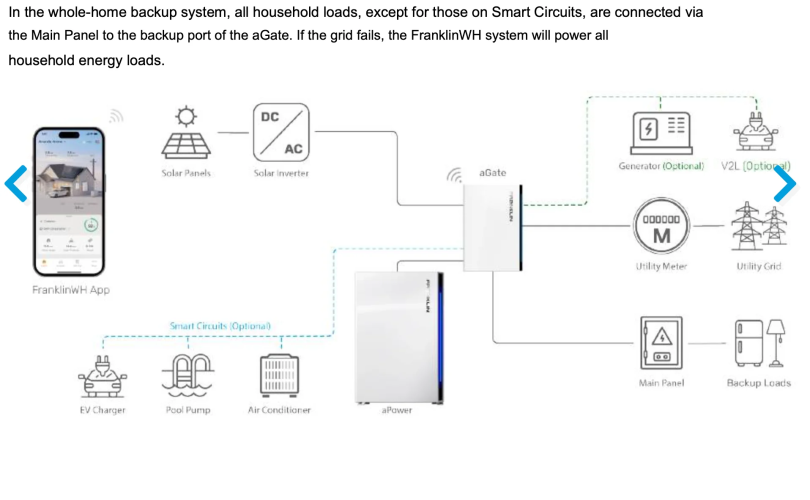
Partial backup keeps a handful of “essential” circuits energized — typically the refrigerator, internet, and a few lights. Whole-home backup keeps every circuit live, including the power-hungry ones: central air, electric ranges, well pumps. The difference isn’t only battery size. It’s how the system absorbs the surge when a large appliance switches on.
Most homes don’t actually need to run everything at once. According to NREL, modeling residential load profiles usually shows that peak demand is brief and intermittent, which is why intelligent management often beats raw capacity.
The switchover you’re not supposed to notice
When the grid drops, a backup system has to disconnect and start powering the home on its own — a process called islanding. The transfer time is how long the lights actually go dark during that handoff. Older transfer switches take a second or two, long enough to reset clocks and crash a desktop. Newer purpose-built backup management hardware, like the Sigen LoadHub, advertises a 0-millisecond switchover — quick enough that sensitive electronics never register the gap.
Sizing without overbuying
Chemistry matters here. Most 2026 residential systems run on LFP — lithium iron phosphate — which trades a bit of energy density for longer cycle life and better thermal safety than older nickel-based packs. Stackable LFP modules such as the BAT 6.0 and BAT 9.0 let a household start near 6 kWh and build toward roughly 54 kWh per stack as needs grow.
How much is enough? According to the U.S. Energy Information Administration, the average American home uses around 30 kWh a day, so one well-sized stack can cover most of a day’s draw — more if the household conserves during an outage. Paired with a hybrid inverter and rooftop solar, that bank refills during daylight instead of running flat overnight.
Load management is the real unlock
This is where whole-home backup becomes affordable. Rather than sizing a battery large enough to run the AC, dryer, and oven at the same instant, a controller can rank circuits and shed the non-critical ones on the fly. A setup that manages up to five controllable loads can quietly pause the pool pump for ten minutes while the oven finishes, then bring it back — no one inside notices.
That kind of orchestration is what turns a modest bank into whole-house coverage. BloombergNEF has tracked lithium-ion pack prices falling year over year, which has made larger systems more attainable, but smart load control still stretches every kilowatt-hour further than capacity alone. In practice, a well-managed solar battery storage system running fewer kilowatt-hours often outlasts a bigger, dumber one.
What “best” actually means
The strongest whole-home setup in 2026 isn’t the one with the highest number on the data sheet. It’s the one that switches over instantly, recharges from the sun, and prioritizes loads intelligently so the house stays comfortable through a long outage instead of a short one. For anyone mapping out which circuits truly matter, starting with a dedicated backup controller — then sizing the battery around it — tends to land at a better system for less money.