
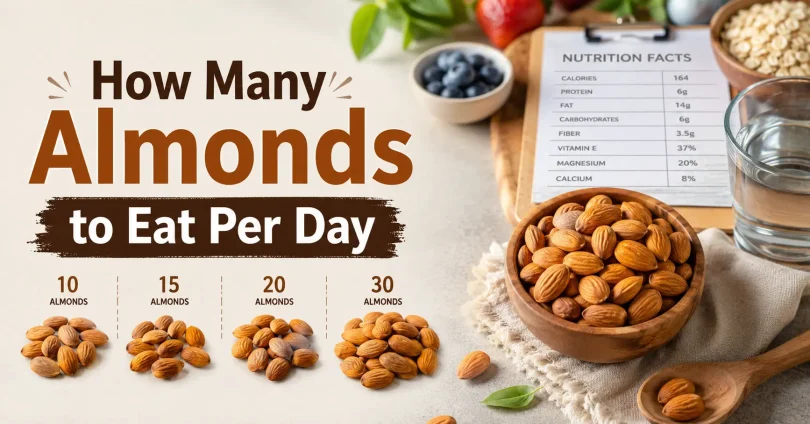
Almonds are one of the most nutrient-dense foods on the planet. A small handful provides healthy fats, protein, fiber, vitamins, and minerals that support nearly every system in the body. But the single most common question people ask is: How Many Almonds to Eat Per Day?
The answer is not one-size-fits-all. Your ideal daily almond intake depends on your age, health goal, body weight, and lifestyle. Whether you want to lose weight, build muscle, boost memory, grow healthier hair, or simply maintain good health, this guide gives you a precise, science-backed answer.
Read on for a complete breakdown of almond intake by goal, by gender, by age group, and by preparation method, along with side effects you need to know about.
Quick Answer: How Many Almonds Per Day by Goal
Here is a clear reference table to help you find the right daily almond dose for your specific purpose:
| Goal / Group | Recommended Daily Intake | Best Time to Eat |
| General health (adults) | 20 to 23 almonds (28 g / 1 oz) | Morning or as a mid-meal snack |
| Weight loss | 10 to 15 almonds | Before meals or as a snack |
| Weight gain / muscle | 25 to 30 almonds | Post-workout or with meals |
| Women (general) | 15 to 20 almonds | Morning or afternoon |
| Pregnant women | 10 to 15 almonds | Morning with warm water |
| Students / brain health | 5 to 10 soaked almonds | Morning on empty stomach |
| Memory improvement | 5 to 10 soaked almonds | Early morning |
| Hair growth | 15 to 20 almonds | Morning with food |
| Children (6 to 12 years) | 4 to 6 almonds | Morning or afternoon snack |
| Seniors (60+) | 10 to 15 almonds | Morning with warm water |
| Diabetics | 6 to 10 almonds | Before a meal to lower glucose spike |
| Soaked almonds | 5 to 10 almonds | First thing in the morning |
Nutritional Profile of Almonds (Per 28 g / 1 oz / About 23 Almonds)
Before diving into specific goals, it helps to understand what you actually get when you eat a standard serving of almonds. According to the USDA, one ounce (approximately 23 almonds) contains:
| Nutrient | Amount per 28 g serving |
| Calories | 164 kcal |
| Protein | 6 g |
| Total Fat | 14 g (mostly monounsaturated) |
| Fiber | 3.5 g |
| Carbohydrates | 6 g |
| Vitamin E | 7.3 mg (37% of Daily Value) |
| Magnesium | 76 mg (19% of Daily Value) |
| Calcium | 76 mg (6% of Daily Value) |
| Phosphorus | 136 mg |
| Riboflavin (B2) | 0.3 mg |
| Manganese | 0.6 mg |
This rich nutritional density is why almonds offer benefits across such a wide range of health goals.
How Many Almonds to Eat Per Day to Lose Weight
Almonds can be a powerful weight-loss tool when eaten in the right quantities. They keep you full, reduce cravings, and stabilize blood sugar. The key is controlling calorie intake while benefiting from their satiety effect.
Recommended Intake for Weight Loss
- Eat 10 to 15 almonds per day (approximately 140 to 210 calories).
- Never exceed 20 almonds if you are in a calorie deficit.
- Replace processed snacks with almonds to reduce overall calorie intake.
How Almonds Support Weight Loss
- High fiber content slows digestion and keeps you feeling full longer.
- Protein reduces the hunger hormone ghrelin.
- Monounsaturated fats improve leptin sensitivity, a hormone that signals fullness.
- A study published in the International Journal of Obesity found that people who ate almonds as part of a low-calorie diet lost more weight than those who followed a diet without almonds.
Best Time to Eat Almonds for Weight Loss
- Eat almonds 30 minutes before a main meal to reduce portion size naturally.
- Use them as a mid-morning or mid-afternoon snack to avoid reaching for unhealthy food.
- Avoid eating almonds late at night, as the high-calorie content can work against a calorie deficit.
Tip: Pair almonds with a piece of fruit for a balanced snack that provides fiber, fat, and natural sugar without causing a blood sugar spike.
How Many Almonds to Eat Per Day to Gain Weight
For individuals who want to gain weight or build muscle mass, almonds are an excellent calorie-dense food that provides healthy fats and protein without relying on junk food.
Recommended Intake for Weight Gain
- Eat 25 to 30 almonds per day (approximately 350 to 430 calories from almonds alone).
- Combine with a calorie surplus diet for effective, healthy weight gain.
- Consume almond butter or mix almonds into smoothies, oatmeal, or rice dishes to add calories easily.
Why Almonds Help with Weight Gain
- High caloric density: 28 grams delivers 164 calories from nutritious sources.
- Rich in protein (6 g per serving) to support muscle building.
- Healthy fats increase caloric intake without raising bad cholesterol.
- Easy to add to any meal without dramatically changing food volume.
Best Combinations for Healthy Weight Gain
- Almonds with banana and whole milk (post-workout shake).
- Almonds mixed into Greek yogurt with honey.
- Almond butter spread on whole-grain bread.
- Crushed almonds added to oatmeal with dates and coconut milk.
How Many Almonds to Eat Per Day for Women

Women have specific nutritional needs that change across different life stages. Almonds support bone health, hormonal balance, skin elasticity, and reproductive health.
General Daily Intake for Women
- Non-pregnant adult women: 15 to 20 almonds per day.
- Pregnant women: 10 to 15 almonds per day (consult your doctor first).
- Breastfeeding women: 15 to 20 almonds per day to support milk production and nutrient supply.
- Postmenopausal women: 20 to 23 almonds per day for bone and heart health.
Why Almonds Are Particularly Beneficial for Women
- Vitamin E in almonds acts as a powerful antioxidant that protects skin cells and reduces visible signs of aging.
- Magnesium helps relieve PMS symptoms including cramps, bloating, and mood swings.
- Calcium and phosphorus support bone density, which becomes critically important after menopause.
- Almonds contain phytosterols that may help balance estrogen levels naturally.
- The healthy fats in almonds contribute to better skin hydration and a natural glow.
Almonds During Pregnancy
Almonds are safe and beneficial during pregnancy in moderate amounts. They provide folate, which is essential for fetal neural tube development, along with calcium, magnesium, and protein. However, pregnant women should avoid eating more than 15 almonds per day without medical guidance, as excessive nut consumption may trigger allergies in sensitive individuals.
How Many Almonds to Eat Per Day for Students
Students face high cognitive demands, exam stress, and irregular meal schedules. Almonds are one of the best brain foods available and have been used in traditional medicine for centuries to support focus and memory.
Recommended Intake for Students
- 5 to 10 soaked almonds every morning on an empty stomach.
- Can be supplemented with 5 additional raw almonds during a study break.
How Almonds Help Students
- Riboflavin (Vitamin B2) supports energy production in brain cells.
- L-carnitine and phenylalanine are natural compounds in almonds that support neurotransmitter activity, improving learning and recall.
- Magnesium reduces cortisol levels, helping manage exam-related stress and anxiety.
- Sustained energy from healthy fats and protein prevents the mid-study energy crash associated with sugary snacks.
- Vitamin E protects brain cells from oxidative stress and cognitive decline.
Study Snack Tip
Replace chips, biscuits, or energy drinks during study sessions with a small bowl of mixed nuts including almonds. This keeps your brain fueled without the sugar crash that disrupts concentration.
How Many Almonds to Eat Per Day: Soaked vs. Raw
One of the most frequently searched questions is whether soaked almonds are better than raw almonds. The answer depends on what benefit you are looking for.
Benefits of Soaking Almonds
- Soaking removes tannins found in the brown skin, which can inhibit nutrient absorption.
- It activates enzymes that improve digestibility and bioavailability of nutrients.
- Soaked almonds are softer, easier to chew, and gentler on the stomach.
- Peeling soaked almonds removes phytic acid, which can block the absorption of iron and zinc.
- According to Ayurvedic tradition, soaked almonds balance the body’s internal heat, making them ideal for morning consumption.
How Many Soaked Almonds Per Day
- Soak 5 to 10 almonds overnight in clean water.
- Peel the skin in the morning and eat on an empty stomach.
- This practice is especially recommended for children, elderly individuals, and people with sensitive digestion.
Soaked vs. Raw: Key Differences
| Factor | Soaked Almonds | Raw Almonds |
| Digestion | Easier to digest | Can be harder for some people |
| Nutrient absorption | Higher (phytic acid reduced) | Slightly lower |
| Skin | Easily removed (recommended) | Skin intact (contains tannins) |
| Taste | Softer, milder | Crunchy, nuttier |
| Best for | Children, seniors, sensitive stomachs | Adults, on-the-go snacking |
| Calorie content | Same as raw | Same as soaked |
How Many Almonds to Eat Per Day for Hair Growth
Hair loss and slow hair growth are often linked to nutritional deficiencies. Almonds address several of the most common nutrient gaps that affect hair health directly.
Recommended Intake for Hair Growth
- Eat 15 to 20 almonds per day consistently for at least 8 to 12 weeks to see noticeable results.
- You can also apply almond oil topically to the scalp for additional benefits.
Key Nutrients in Almonds That Support Hair Growth
- Vitamin E: A powerful antioxidant that improves scalp circulation and protects hair follicles from oxidative stress. Studies show that people with alopecia (hair loss) often have low vitamin E levels.
- Biotin (Vitamin B7): Almonds contain small amounts of biotin, which is essential for keratin production, the structural protein that makes up hair strands.
- Magnesium: Magnesium deficiency is directly linked to hair loss. Almonds are one of the best dietary sources of magnesium.
- Omega-9 fatty acids (oleic acid): Found in almond oil and whole almonds, these fats nourish the scalp and improve hair elasticity.
- Zinc: Supports the repair cycle of hair follicles and reduces scalp inflammation.
Additional Tips
- Combine daily almond consumption with adequate protein intake (eggs, legumes, dairy) for best hair growth results.
- Stay hydrated, as dehydration affects scalp health and hair texture.
- Massage diluted almond oil into the scalp twice a week for deeper nourishment.
How Many Almonds to Eat Per Day for Memory
Almonds have been associated with improved memory and brain function across both traditional and modern scientific literature. In ancient Ayurvedic texts, almonds (badam) were prescribed as a brain tonic. Today, nutritional science supports many of those claims.
Recommended Daily Intake for Memory
- 5 to 10 soaked almonds every morning is the most widely recommended practice for memory improvement.
- Consistency is key. Eating almonds daily for several months produces more significant cognitive benefits than occasional consumption.
How Almonds Improve Memory
- Riboflavin and L-carnitine in almonds support the growth of new brain cells and maintain existing neural pathways.
- Vitamin E prevents oxidative damage to brain tissue and has been studied for its potential role in slowing age-related cognitive decline.
- Magnesium improves synaptic plasticity, meaning the brain becomes better at forming and retaining new memories.
- Zinc is required for healthy hippocampal function. The hippocampus is the region of the brain most responsible for forming new long-term memories.
- A study published in the Brain Research journal found that rats fed almonds showed significant improvements in memory and reduced oxidative stress in brain tissue.
Best Practice for Memory Benefits
- Soak 5 to 10 almonds overnight, peel them in the morning, and eat them before breakfast.
- Add a pinch of turmeric or a few strands of saffron to the soaked almonds for an enhanced cognitive effect as recommended by Ayurvedic practitioners.
- Combine daily almond intake with regular aerobic exercise and adequate sleep for maximum memory retention.
Side Effects of Eating Too Many Almonds Per Day
While almonds are incredibly healthy, eating too many can cause unwanted side effects. Here is what to watch out for if you overeat almonds regularly.
1. Weight Gain
Almonds are calorie-dense. Eating more than 30 to 40 almonds per day without accounting for total calorie intake can lead to a calorie surplus and gradual weight gain. Stick to your goal-based portion.
2. Digestive Issues
Almonds are high in fiber. Consuming too many too quickly can cause bloating, gas, constipation, or diarrhea. Increase almond intake gradually to allow your digestive system to adjust.
3. Vitamin E Toxicity
Almonds are rich in Vitamin E. Excessive intake over long periods, especially when combined with Vitamin E supplements, can cause nausea, headaches, blurred vision, and in rare cases, bleeding issues due to its blood-thinning properties.
4. Kidney Stones
Almonds are high in oxalates. People prone to calcium oxalate kidney stones should limit almond intake to 10 almonds per day and drink plenty of water to prevent crystal formation.
5. Allergic Reactions
Tree nut allergies are among the most common food allergies. Symptoms can range from mild (itching, hives) to severe (anaphylaxis). If you experience any allergic reaction after eating almonds, discontinue use and consult a doctor immediately.
6. Drug Interactions
The high Vitamin E content in almonds can interact with blood-thinning medications such as warfarin. If you take any medication, consult your healthcare provider about the appropriate daily almond intake.
7. Increased Calorie Intake in Children
Children should not eat more than 6 almonds per day. Larger quantities can be difficult to digest and may introduce an excessive calorie load for small bodies.
| Side Effect | Cause | Prevention |
| Weight gain | Excess calories | Stick to 20 to 23 almonds per day |
| Bloating / gas | High fiber overload | Increase intake gradually, drink water |
| Vitamin E toxicity | Overconsumption + supplements | Avoid combining with Vit E pills |
| Kidney stones | High oxalate content | Limit to 10 per day if prone |
| Allergic reaction | Tree nut allergy | Stop use, consult a doctor |
| Drug interaction | Vitamin E blood-thinning effect | Consult doctor if on medication |
When Is the Best Time to Eat Almonds?

Morning (Best Option)
- Eating almonds in the morning, especially on an empty stomach, maximizes nutrient absorption.
- Soaked almonds eaten first thing in the morning support digestion, energy, and cognitive function throughout the day.
Pre-Workout
- A small handful of almonds 30 to 60 minutes before exercise provides sustained energy from healthy fats and protein.
- Avoid eating a large quantity before intense exercise to prevent stomach discomfort.
Post-Workout
- Almonds combined with a carbohydrate source (banana, rice cake) after exercise help with muscle recovery and glycogen replenishment.
As a Mid-Meal Snack
- Eating almonds between meals is one of the most effective ways to control hunger and prevent overeating at the next meal.
Before Bed (Not Recommended)
- Avoid large almond servings late at night. The calorie density can contribute to weight gain if consumed in excess of your daily needs at night.
- A very small amount (5 almonds) with warm milk before bed may support sleep quality due to the magnesium content.
Raw, Roasted, or Soaked: Which Is Best?
| Form | Pros | Cons | Best For |
| Raw | Highest fiber, all enzymes intact | Phytic acid present, harder to digest | General snacking, adults |
| Soaked & peeled | Best absorption, easiest digestion | Requires overnight prep | Kids, seniors, brain/memory |
| Dry roasted | Enhanced flavor, longer shelf life | Slight reduction in some heat-sensitive nutrients | On-the-go snacking |
| Oil roasted | Crunchy, flavorful | Higher calories, avoid added salt | Occasional treat only |
| Almond butter | Easy to add to meals | Watch for added sugar/salt in brands | Weight gain, post-workout |
| Almond milk | Dairy-free alternative | Much lower protein/fiber than whole almonds | Lactose-intolerant individuals |
Almonds for Special Groups: Tailored Daily Intake
Almonds for Children
- Children aged 1 to 3: 2 to 3 crushed or ground almonds mixed into food.
- Children aged 4 to 8: 4 to 5 almonds per day.
- Children aged 9 to 12: 5 to 6 almonds per day.
- Always soak and peel almonds for children under 10 to prevent choking and improve digestion.
Almonds for Seniors (Age 60 and Above)
- 10 to 15 soaked almonds per day is the ideal amount.
- Soaked almonds are preferred because they are softer and easier on aging digestive systems.
- The magnesium and calcium in almonds support bone strength and reduce the risk of osteoporosis.
- Vitamin E content may slow age-related cognitive decline.
Almonds for Diabetics
- 6 to 10 almonds per day, eaten before a meal, can help reduce the post-meal blood sugar spike.
- A study in Metabolism journal found that eating almonds before a high-carbohydrate meal significantly lowered the glycemic response.
- The healthy fat and fiber content slows glucose absorption into the bloodstream.
- Avoid salted or sugar-coated almond products.
Almonds for Heart Health
- 20 to 23 almonds per day (one ounce) is the evidence-based amount most associated with cardiovascular benefits.
- Regular almond consumption lowers LDL (bad) cholesterol while maintaining HDL (good) cholesterol.
- The monounsaturated fats in almonds reduce arterial inflammation.
- Magnesium supports healthy blood pressure regulation.
Frequently Asked Questions
Q1. Can I eat almonds every day?
Yes. Eating almonds daily within recommended quantities is safe and beneficial for most healthy adults. Consistency is what produces long-term health benefits.
Q2. Is it better to eat almonds in the morning or at night?
Morning is the better option. Soaked almonds eaten on an empty stomach absorb more efficiently and set a healthy energy tone for the day. Eating almonds late at night is fine in small amounts but not recommended in large quantities.
Q3. How many almonds are in one ounce?
Approximately 23 almonds equal one ounce (28 grams), which is the standard recommended serving size used in most nutrition studies.
Q4. Are soaked almonds better than raw almonds?
Soaked almonds are easier to digest and allow for better nutrient absorption because soaking reduces phytic acid and tannins. For most people, soaked and peeled almonds are the superior option for daily health.
Q5. Can almonds cause weight gain?
Yes, if consumed in excess. Almonds are calorie-dense. Eating more than 30 almonds per day consistently without adjusting total calorie intake can lead to weight gain over time.
Q6. How many almonds should a child eat per day?
Children aged 6 to 12 should eat 4 to 6 soaked and peeled almonds per day. Always supervise young children while eating whole nuts to prevent choking.
Q7. Do almonds help with hair loss?
Yes. The Vitamin E, magnesium, zinc, and healthy fats in almonds directly support scalp health and hair follicle function. Eating 15 to 20 almonds daily over several months can show visible improvement in hair strength and growth.
Q8. What happens if you eat too many almonds?
Overeating almonds can cause bloating, digestive discomfort, weight gain, Vitamin E excess, or interfere with certain medications. Stick to goal-based portions as outlined in this guide.
Conclusion
Almonds are one of the most versatile and beneficial foods you can add to your daily diet. The ideal amount depends entirely on your individual goal, health condition, age, and lifestyle. For most healthy adults, 20 to 23 almonds per day (one ounce) is the evidence-based standard. For weight loss, stay at 10 to 15. For weight gain, go up to 25 to 30. For brain health, memory, and students, 5 to 10 soaked almonds every morning is the most effective practice.
The key to getting the most out of almonds is consistency, proper preparation, and eating them at the right time for your goal. Start with a small daily portion, monitor how your body responds, and adjust based on your needs.
When in doubt, consult a registered dietitian or healthcare provider to tailor your almond intake to your specific health situation.
You May Also Like It: