
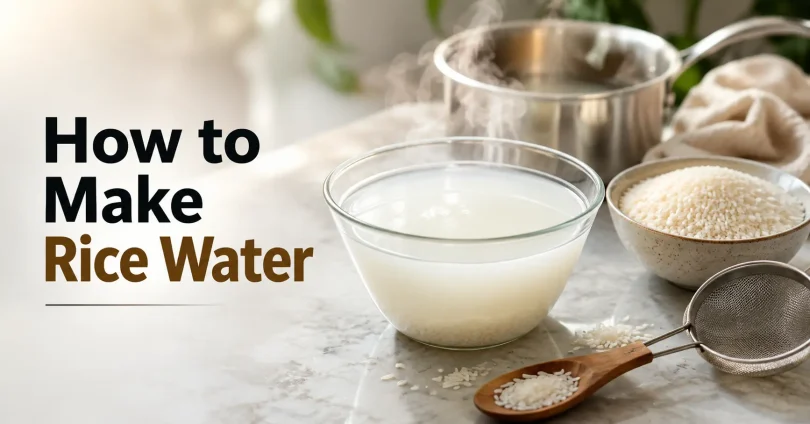
How to make rice water. rice water is made by rinsing raw rice, then soaking, boiling, or fermenting it in water until the starch and nutrients leach out, then straining off the liquid. Soaking gives you a mild version in under an hour, boiling gives you a thicker starch water in about 20 minutes, and fermenting (24 to 48 hours) produces the strongest version with a lower pH, which is why most skin and hair routines lean on it. Which one you should make depends on how much time you have and how your skin or scalp handles new products.
I’ve made more bad batches of rice water than I’d like to admit. Too watery, too moldy, one that smelled like a gym bag after three days on the counter. Once you know the actual variables that matter, though, it stops being a guessing game. Below are the three methods that work, what changes between them, and the details most articles on this topic skip entirely.
The 3 Ways to Make Rice Water (and Which One Fits Your Routine)
Each method pulls a different amount of starch and nutrients out of the rice, and that changes how strong the final liquid is, how long it keeps, and what it’s best used for.
| Method | Time Needed | Potency | Fridge Life | Best For |
| Soaking (plain) | 30–60 min | Mild | 2–3 days | First-time users, daily face mist, sensitive skin |
| Boiling | 15–20 min | Medium | 3–4 days | Using leftover rice, thicker scalp masks |
| Fermenting | 24–48 hrs + 20 min prep | Strong | 5–7 days | Hair rinses, scalp buildup, experienced users |
Method 1: Soaking Rice Water
You need: 1/2 cup raw rice (any variety) and 2–3 cups room-temperature water.
- Rinse the rice once under running water for about 10 seconds. This is just to knock off surface dust, not to strip the starch, so don’t scrub it.
- Drop the rinsed rice into a bowl with the water.
- Swirl it with your hand for 30 to 60 seconds until the water turns milky-white.
- Let it sit for 20 to 30 minutes so more starch releases.
- Strain the rice out with a fine mesh sieve. Keep the rice for cooking; you don’t need to waste it.
This version has the mildest scent and the lowest risk of irritation, which is why I hand it to anyone trying rice water for the first time.
Method 2: Boiled Rice Water
You need: 1/2 cup rice and 2 cups water, a small pot.
- Rinse the rice briefly, then add it to the pot with the water.
- Bring it to a boil, then drop to a simmer for 10 minutes, uncovered.
- Turn off the heat and let it cool completely, at least 20 to 30 minutes. Straining it hot will scald your hands and clouds the flavor of the leftover rice if you plan to eat it.
- Strain into a clean jar.
Boiling pulls out more starch than soaking does in far less total time, which makes it the practical choice on a weeknight when you’re already cooking rice for dinner. The trade-off is a slightly cooked, starchier smell that some people find less pleasant on the face.
Method 3: Fermented Rice Water
This is the version most skin and hair guides are actually talking about when they mention rice water, even when they don’t say so directly.
- Rinse 1/2 cup rice, then soak it in 2 cups water using the soaking method above.
- Instead of refrigerating it right away, cover the jar loosely (a cloth, coffee filter, or lid set on top without sealing) and leave it at room temperature.
- Let it ferment for 24 hours in a warm climate, or up to 48 hours somewhere cooler. In a warm kitchen, especially anywhere the ambient temperature sits above 27°C (80°F), fermentation can finish in as little as 12 to 18 hours, so check it earlier than you think you need to.
- Do a smell check. It should smell tangy and slightly sour, close to plain yogurt or rice vinegar. If it smells rotten, musty, or like something died in the jar, throw the whole batch out and start over.
- Strain, then transfer to the fridge. Fermentation slows down drastically in the cold but doesn’t fully stop, so use it within a week.
Why fermentation matters more than people realize
Fermented rice water typically sits around a pH of 4.0 to 4.5, close to your skin’s natural acid mantle (roughly 4.7 to 5.5). That’s the real reason it works well as a toner: it’s not stripping your skin’s pH the way plain tap water can. Boiled or soaked rice water sits closer to neutral, around pH 6 to 7, so it’s gentler but also less active.
Two Variables Most Guides Skip: Your Water and Your Rice

Water quality changes the outcome
If your tap water is heavily chlorinated, it can slow down or even stall fermentation, since chlorine is designed to kill the same microbes you’re trying to cultivate. If your fermented batch never develops that tangy smell after 48 hours and just smells flat, this is usually why.
- Use filtered, bottled, or boiled-and-cooled water for the fermented method specifically.
- Tap water is fine for the soaking and boiling methods since you’re not relying on live fermentation there.
Rice variety isn’t interchangeable
- White rice: highest starch content, mildest scent, the standard choice for beginners.
- Brown rice: more fiber and B vitamins but less surface starch, so the water is noticeably thinner and less slippery.
- Black or purple rice: contains anthocyanins, the same antioxidant pigment in blueberries, and will tint the water a light purple. Popular for face mists aimed at brightening, though evidence here is more anecdotal than clinical.
- Jasmine or basmati: work fine, functionally close to standard white rice.
One more thing nobody mentions: if you’re worried about pesticide residue, that first quick rinse is the one that removes most surface residue, and you should discard that initial rinse water rather than use it. The starch you actually want comes out during the soak, boil, or ferment stage, not the rinse.
Mistakes That Ruin a Batch
- Sealing the fermentation jar airtight. Fermentation produces gas. A tightly sealed lid can build pressure, and I’ve had a jar hiss like a soda can when I finally opened it. Cover it loosely instead.
- Using too little water. If the rice-to-water ratio drops much below 1:4, you end up with something closer to a paste than a liquid you can spray or pour.
- Skipping the smell test. Cloudy and tangy is normal. Fizzy-sour with a hint of mold, pink or orange discoloration, or a genuinely rotten smell means bacteria you don’t want took over. Don’t try to save it by boiling it afterward.
- Fermenting past 48 hours. The window between ‘nicely fermented’ and ‘gone bad’ is narrower than people expect, especially in a warm kitchen. Set a timer.
- Storing it in a reactive metal container. Fermented rice water is acidic. Stick with glass or food-safe plastic rather than uncoated aluminum or copper.
How to Use It Without Overdoing It
On skin
- Patch test on your inner forearm for 24 hours before putting fermented rice water anywhere near your face, especially if you have reactive or eczema-prone skin.
- Dilute fermented rice water 1:1 with plain water the first few times you use it as a toner. Full-strength can feel tight or tingly on drier skin types.
- Soaked or boiled rice water can usually be used undiluted since it’s milder.
On hair
This is the part most articles leave out: rice water is high in protein, and hair can get too much of a good thing. If you have fine, low-porosity, or color-treated hair, overusing rice water rinses can lead to protein overload, which shows up as dryness, stiffness, and unexpected breakage rather than the shine you were going for.
- Limit rinses to once or twice a week, not every wash.
- Always follow with a moisturizing conditioner to rebalance protein and moisture.
- If your hair starts feeling straw-like a few weeks in, stop for two weeks and reassess. That’s protein overload correcting itself once you remove the trigger.
How Long Rice Water Lasts and When to Toss It
| Method | Fridge Life | Signs It’s Gone Bad |
| Soaking | 2–3 days | Gray tint, sour-rotten (not tangy) smell, cloudiness that separates into layers |
| Boiling | 3–4 days | Foul smell, visible film on the surface |
| Fermented | 5–7 days | Excess fizzing beyond a light tang, pink or orange spots, mold on the surface |
If you’re ever unsure, trust your nose over the calendar. Rice water that smells wrong is wrong, regardless of how many days it’s technically been in the fridge.
Frequently Asked Questions
Can I use water left over from cooking rice instead of making a separate batch?
Yes, but only if the rice was boiled without salt, oil, or seasoning added to the pot. Plain cooking water works similarly to the boiled method above, just let it cool fully before using it on skin or hair.
Does rice water go bad if I leave it out on the counter instead of the fridge?
Soaked or boiled rice water left at room temperature past 4 to 6 hours starts fermenting on its own whether you intended it to or not. That’s not automatically dangerous, but it’s unpredictable, so refrigerate promptly if you didn’t intend to ferment it.
Is fermented rice water actually better than plain rice water for skin?
It’s more active, not universally better. The lower pH and higher concentration of amino acids and antioxidants make it more effective for things like reducing shine and calming irritation, but that same potency means it’s more likely to sting on sensitive or compromised skin. Plain soaked rice water is the safer starting point.
Can I make rice water with instant or pre-cooked rice?
Technically yes for the boiling method, since instant rice releases starch quickly, but the nutrient content is lower because much of it was processed out during manufacturing. Raw, unprocessed rice gives a more nutrient-dense result across all three methods.
How often should I actually use rice water?
For skin, 2 to 3 times a week as a toner is a reasonable starting point. For hair, once or twice a week is enough given the protein-overload risk covered above. There’s no benefit to daily use for either, and it raises the odds of irritation or overload.
Why is my rice water cloudy in one batch and almost clear in another?
Cloudiness comes down to how much starch actually released, which depends on rice variety, how long it soaked, and water temperature. A clearer batch isn’t a failure, it just means less starch came out, usually because the rice sat for a shorter time or the water was cold. It’s still usable, just slightly weaker.
Conclusion
Rice water isn’t complicated once you separate the three methods and stop treating them as interchangeable. Start with the soaking method if you’re new to it, move to boiling when you’re already cooking rice anyway, and save fermenting for when you want something stronger and you’re comfortable checking a jar every few hours by smell. Pay attention to your water source, your rice type, and how your skin or hair actually responds, because those three details matter more to the outcome than the recipe itself. Get those right, and rice water earns its place as one of the few genuinely low-cost additions worth keeping in a routine.
You May Also Like It: