
Direct Answer
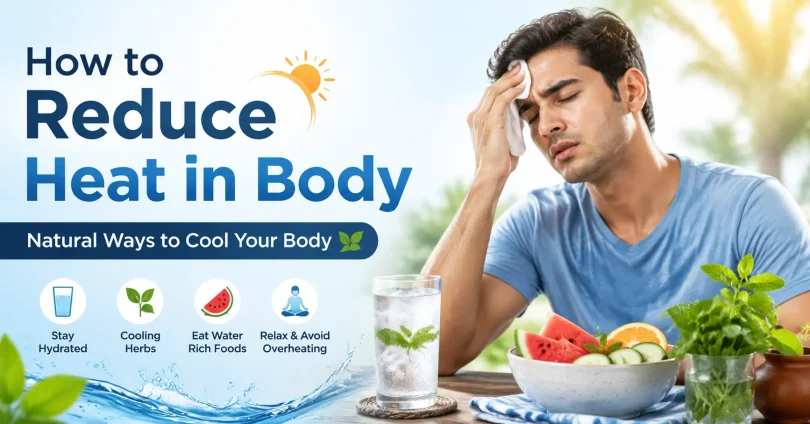
The fastest way to reduce heat in the body is to cool your skin and blood vessels directly. Sip cold water, press a cold, damp cloth against your wrists, neck and the insides of your elbows, and move into shade or a fan within the first ten minutes of feeling overheated. For the long game, cutting back on caffeine, alcohol and heavy, protein-dense meals, and adding water-rich foods like cucumber, buttermilk and watermelon, keeps your baseline body temperature lower all day, not just during a sudden flare.
If you have searched “how to reduce heat in body” while sweating through a June afternoon, you already know the usual advice: drink water, eat cooling foods, avoid the sun. That is not wrong. It is just incomplete. Most articles stop at the surface and never explain why your body overheats in the first place, why some cooling tricks backfire, or how heat shows up differently depending on your hormones, your medications and even your fabric choices.
I have spent a good part of my adult life living and working in cities where summer temperatures sit above 40°C for weeks at a time. What follows is what actually holds up in that kind of heat, not just what sounds good on paper.
Why Your Body Overheats in the First Place
Your body is not a passive victim of the weather. It runs a constant balancing act between heat you generate internally (from digestion, muscle activity and basic metabolism) and heat you absorb from your surroundings. The hypothalamus, a small structure at the base of your brain, is the thermostat running this show. It triggers sweating and widens your blood vessels (vasodilation) to push heat out through your skin.
The problem is not always the temperature outside. It is often how well your body can get rid of the heat it already has. A few things quietly break this cooling system:
- Humidity above roughly 60 to 70 percent stops sweat from evaporating properly. The sweat just sits on your skin, and you feel hotter even though your body is trying hard to cool itself.
- Tight, synthetic clothing traps a layer of warm, humid air right against your skin, which is exactly what evaporative cooling needs to escape.
- Certain medications (antihistamines, some blood pressure drugs, and antidepressants) reduce sweating as a side effect, which is rarely mentioned when people ask how to cool down.
- A heavy, protein-rich meal raises your core temperature for one to two hours afterward because digesting protein burns more metabolic energy than digesting carbs or fat. This is called diet-induced thermogenesis, and it is why a large meat-heavy lunch can leave you feeling warmer than the weather alone would explain.
Fast Relief: What Actually Cools You Down in the Next 10 Minutes
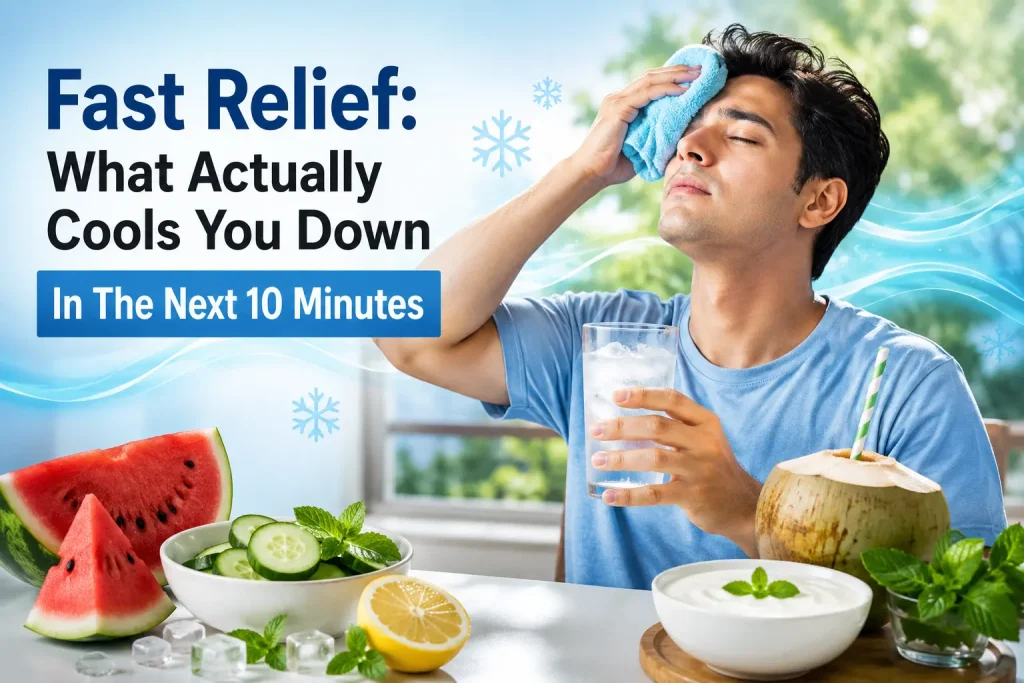
When you need heat gone right now, not in an hour, focus on the parts of your body where blood vessels sit close to the skin: wrists, neck, temples, and behind the knees. Cooling these spots chills the blood passing just underneath, and that cooler blood circulates back through your core.
- Cold, damp cloth on pulse points, not a full ice pack. Ten to fifteen minutes is enough; longer can cause your blood vessels to constrict and trap heat instead of releasing it.
- Lukewarm shower, not an ice-cold one. This trips people up constantly. Very cold water makes your blood vessels clamp shut to protect your core, which can momentarily raise your internal temperature instead of lowering it. Lukewarm water cools you steadily without that rebound effect.
- A damp cloth plus a fan, used together. Air alone does very little once the room is already hot; moving air over damp skin speeds up evaporation, which is where the real cooling happens.
- Loosen or remove a layer of clothing before you do anything else. It sounds obvious, but most people reach for a drink before they think to let trapped heat escape.
- Elevate your feet for a few minutes if you are lightheaded from heat, which helps blood return to your head and reduces that woozy feeling.
One field note: standing directly in front of a fan when the air itself is above roughly 35°C can make you feel warmer, not cooler, because you are just blowing hot air across your skin. In genuinely hot, dry conditions, a fan works best combined with a damp cloth or spray bottle, not on its own.
Food and Drinks That Actually Lower Internal Heat
Most lists just say “eat cooling foods” without explaining what that means physiologically. Cooling foods generally work through one of three mechanisms: high water content that supports sweat production, electrolytes that help your body regulate temperature properly, or natural compounds that ease inflammation-driven heat. Here is how the common options actually stack up:
| Food / Drink | Why It Actually Works | Best Time | Watch Out For |
| Buttermilk (chaas) | Probiotic + electrolytes; settles digestion, which lowers the metabolic heat load from a heavy meal | After lunch | Skip if lactose sensitive |
| Coconut water | Natural potassium and sodium replace what you lose in sweat, better than plain water alone | Mid-morning, post-workout | Adds sugar; watch intake if diabetic |
| Cucumber | About 95 percent water plus silica, which supports skin cooling from within | Any time, raw | Low calorie, won’t sustain energy alone |
| Watermelon | High water content plus citrulline, which supports blood vessel dilation for better heat release | Between meals | Natural sugars; portion if watching blood sugar |
| Fennel seed water | Traditional digestive cooler; eases the heat that follows spicy or oily meals | After spicy meals | Mild effect; not a fast fix |
| Curd / plain yogurt | Cooling on contact and supports gut bacteria linked to lower internal inflammation | Lunch, not late night | Avoid at night in Ayurvedic view; can cause congestion |
| Barley water | Mild diuretic that flushes excess heat through urine while replacing fluids | Morning | Unflavoured version only; skip added sugar |
On the flip side, a few everyday items push internal heat up more than people expect: caffeine and alcohol both act as mild diuretics, meaning they pull water out of your system right when you need to retain it. Red meat and fried food take longer to digest, extending that after-meal heat spike. And very spicy chillies, despite the folk wisdom that they “cool you down” by making you sweat, raise your core temperature first, before any cooling effect kicks in. That works for some people in dry heat, and backfires badly in humid conditions where the sweat cannot evaporate anyway.
Ayurveda’s Angle: What Holds Up, and What Gets Oversimplified
Most wellness blogs mention “pitta dosha” and stop there. Pitta is not simply “the heat dosha.” In Ayurvedic thinking, pitta governs digestion and metabolism, so a pitta imbalance shows up as much through irritability, acidity and skin breakouts as through literally feeling hot. Treating body heat only as a temperature problem, without touching digestion, is why some people follow every cooling-food tip and still feel warm and irritable.
Sheetali and Sheetkari Pranayama
These are two breathing techniques that competitor articles on this topic rarely mention, and they are genuinely useful. For Sheetali, curl your tongue lengthwise into a tube, inhale slowly through it, and exhale through your nose. If you cannot curl your tongue, Sheetkari works the same way: inhale through clenched teeth with lips slightly parted. Both cool the air as it enters, which cools the blood vessels at the back of the throat. Five to ten rounds, done first thing in the morning before the day heats up, is a low-effort habit that costs nothing and takes under two minutes.
Sandalwood (Chandan) Paste
Applied to the forehead and temples, sandalwood paste has a genuine, measurable cooling effect on skin temperature, not just a psychological one, because of its volatile oils. It is a small ritual, but it is one of the few Ayurvedic remedies with a mechanism that is easy to explain rather than just accept on faith.
Body Heat and Hormones: Why Women Often Feel It More
This is the section most general health articles skip entirely, and it matters. Hormonal shifts change your baseline body temperature independent of the weather.
- Progesterone, which rises after ovulation, raises your resting body temperature by roughly 0.3 to 0.5°C. This is why many women feel warmer in the second half of their cycle, regardless of the season. Basal body temperature tracking apps actually use this shift to estimate ovulation.
- Menopause and perimenopause bring hot flashes and night sweats caused by a narrowing of the hypothalamus’s temperature comfort zone. Even a small rise in core temperature triggers a full sweating and flushing response that feels sudden and intense.
- Hyperthyroidism raises your resting metabolic rate, so you generate more internal heat around the clock, not just during exercise or hot weather. Persistent heat intolerance alongside weight loss or a racing heartbeat is worth mentioning to a doctor rather than managing with cooling foods alone.
For hormone-driven heat specifically, magnesium-rich foods (pumpkin seeds, spinach, dark chocolate) and phytoestrogen-containing foods (flaxseed, soy) have reasonable evidence behind them for easing hot flash frequency, though neither works as fast or as dramatically as a cold compress does for a one-off heat spike. Layered, breathable cotton clothing that you can peel off in stages does more for hot flashes than any single food ever will.
Everyday Habits Quietly Raising Your Baseline Temperature
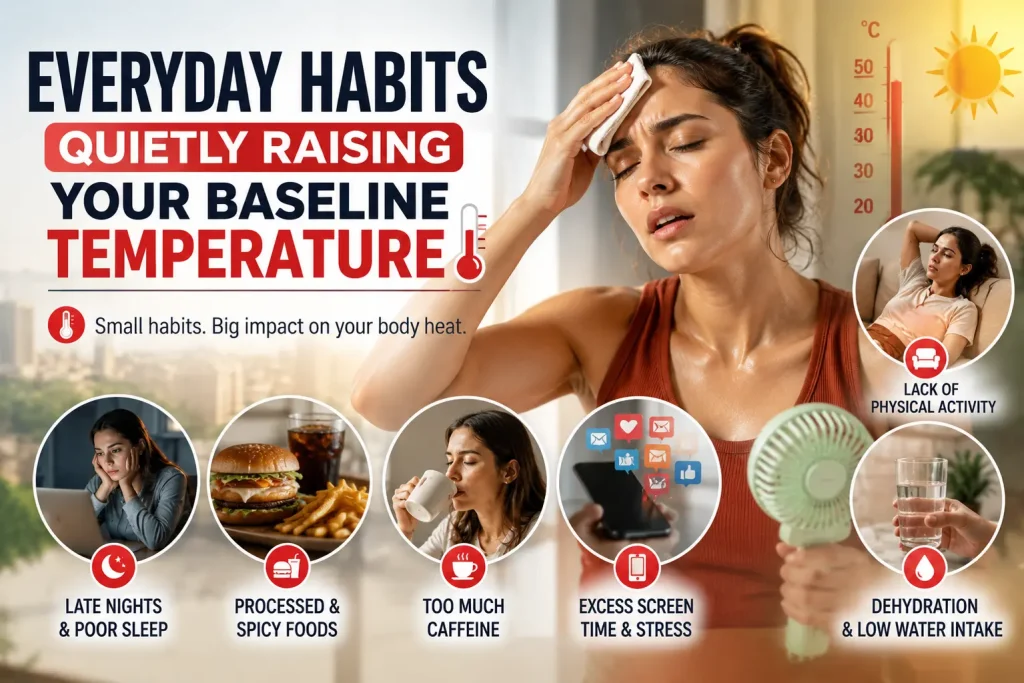
Beyond diet, a handful of ordinary habits push your resting body temperature up without you noticing:
- Drinking only plain water during heavy sweating dilutes your sodium levels without replacing them, which can leave you feeling hot, sluggish and headachy even after drinking plenty of fluids. This is a common mistake among people who exercise outdoors and assume water alone is enough.
- Poor sleep disrupts the hypothalamus’s temperature regulation the next day, making you more heat-sensitive even in mild weather.
- Synthetic activewear worn all day, not just during a workout, traps heat far longer than cotton or linen.
- Skipping breakfast then overeating at lunch creates a bigger digestive heat spike than eating smaller, more frequent meals through the day.
When It Is Not Just “Body Heat”: Recognising Heat Exhaustion and Heat Stroke
Every competitor list treats body heat as a single, mild issue. It is not always mild. Knowing where ordinary overheating ends and a medical emergency begins can matter more than any cooling drink.
| Sign | Heat Exhaustion | Heat Stroke (Emergency) |
| Sweating | Heavy sweating continues | Sweating often stops; skin feels hot and dry |
| Skin | Cool, pale, clammy | Hot, red, flushed |
| Mental state | Usually normal, may feel dizzy | Confusion, slurred speech, possible fainting |
| Body temperature | Elevated but under about 104°F / 40°C | 104°F / 40°C or higher |
| What to do | Move to shade, sip water or an electrolyte drink, cool skin with damp cloths; should improve in 30 minutes | Call emergency services immediately; cool the person with water while waiting for help |
A practical rule I use: if cooling measures have not brought noticeable relief within half an hour, or if there is any confusion, slurred speech or fainting involved, that has crossed from “reduce body heat” into “medical emergency,” and it needs professional care, not another glass of buttermilk.
A Field-Tested Routine for Hot, Humid Climates
Reading tips in isolation rarely helps as much as seeing how they fit into an actual day. Here is the rhythm I follow once daytime temperatures cross 38°C with high humidity:
- Early morning (before 8am): two rounds of Sheetali breathing, a glass of water with a pinch of salt and lemon before anything caffeinated, and a light, carb-forward breakfast rather than a heavy, protein-dense one.
- Midday: the biggest meal of the day stays moderate in protein and skips fried food entirely; buttermilk afterward instead of a sweet dessert; direct sun avoided between 12 and 3pm whenever possible, not because of a rule but because that window genuinely accounts for most of the day’s heat load.
- Afternoon slump: a damp cloth on the back of the neck and a five-minute break in the coolest room in the house, rather than reaching straight for cold coffee, which only adds a diuretic on top of the heat.
- Evening: a lukewarm, not ice-cold, shower, loose cotton clothing, and coconut water instead of a second cup of tea.
None of these steps is dramatic on its own. Together, they keep your baseline temperature low enough that a genuinely hot afternoon does not tip you into exhaustion.
Frequently Asked Questions
How can I reduce body heat immediately without ice or a fridge nearby?
Wet a cloth or even your shirt sleeve with any available water, press it to your wrists and the back of your neck, and move into shade. Fanning damp skin with paper, a hand fan or a phone case works almost as well as an electric fan by speeding up evaporation.
Does drinking cold water cool the body down or actually heat it up?
Cold water cools you slightly faster in the first few minutes, but your body has to work to warm it to core temperature afterward, which produces a small amount of extra metabolic heat. Room-temperature or cool water is absorbed faster and is generally the better choice for sustained hydration through a hot day, while cold water is fine as a quick, short-term relief measure.
Can excess body heat cause skin problems like rashes or breakouts?
Yes. Trapped heat and sweat clog pores and irritate hair follicles, which is why heat rash (prickly heat) and heat-triggered acne flare-ups are common in humid weather. Loose, breathable clothing and rinsing sweat off promptly reduce both.
Why do I feel hot all the time even when the room is cool?
Persistent heat intolerance that is not explained by weather can point to a hormonal cause (thyroid activity, perimenopause), a medication side effect, poor sleep, or anxiety, all of which affect the hypothalamus’s temperature regulation. If it persists for more than a couple of weeks, it is worth a conversation with a doctor rather than assuming it is just “body heat.”
Conclusion
Reducing body heat is about more than drinking extra water or staying out of the sun. Your body’s cooling system depends on hydration, proper nutrition, breathable clothing, balanced daily habits, and understanding the factors that trigger excess heat, from humidity and diet to hormones and certain medications. By combining quick cooling techniques with long-term lifestyle changes, you can stay comfortable and lower your risk of heat-related illness. If overheating is frequent, severe, or accompanied by symptoms such as confusion, fainting, or a high fever, seek medical attention immediately instead of relying on home remedies.
You May Also Like It:
How to Download a WhatsApp DP Without Screenshot