
Introduction
The Ball Poem by John Berryman is a deceptively simple yet emotionally rich poem that explores the theme of loss and growing up. Often taught in schools due to its clarity and depth, this poem resonates with both young readers and mature audiences as it reflects on a child’s first brush with grief and understanding of the real world.
About the Poet: John Berryman

John Berryman (1914–1972) was an influential American poet and scholar known for his introspective and confessional poetry. He gained prominence through his collection “The Dream Songs”, which revealed his personal struggles, including loss, mental illness, and identity.
Though The Ball Poem appears simple on the surface, Berryman weaves deep existential meaning into it.
You May Also Like It:
Happy Birthday Poem: Celebrate with Heartfelt Words
Love Poem: A Timeless Way to Express the Heart
10 Things I Hate About You Poem
Summary of “The Ball Poem”
The Ball Poem narrates a moment in a young boy’s life when he loses his ball. At first glance, it seems trivial — just a toy. But as the poem unfolds, it becomes clear that the ball symbolizes much more: it represents his childhood, innocence, and first experience with real loss.
Famous Lines from The Ball Poem
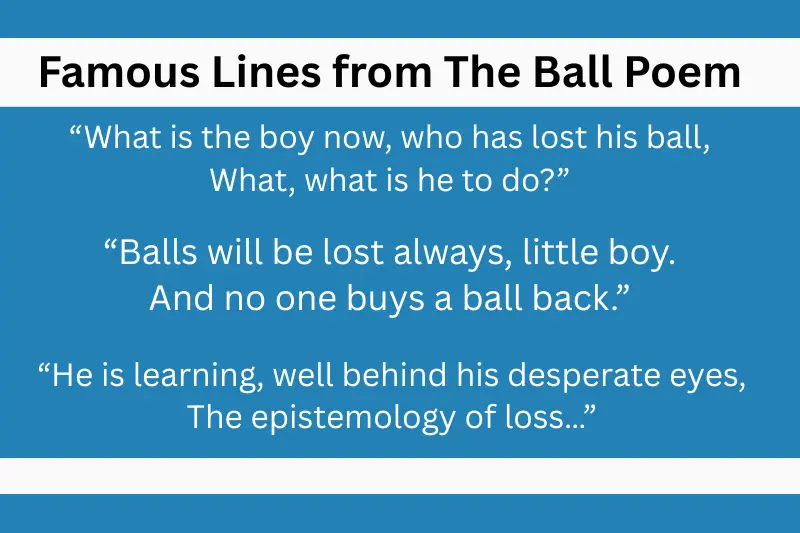
“What is the boy now, who has lost his ball,
What, what is he to do?”
“Balls will be lost always, little boy.
And no one buys a ball back.”
“He is learning, well behind his desperate eyes,
The epistemology of loss…”
These lines encapsulate the poem’s emotional depth and philosophical undertones.
Themes in The Ball Poem
Loss of Innocence
The boy’s ball symbolizes his youth and carefree days. Losing it marks his first step toward the adult world, where loss is inevitable.
Realization and Acceptance
Instead of buying him a new ball, the poet lets the boy process the grief. This highlights the importance of learning to cope with loss independently.
Growing Up
The poem subtly shows how small events — like losing a ball — can trigger deep learning experiences that shape one’s maturity.
Epistemology of Loss
Berryman uses the phrase “epistemology of loss” to emphasize the intellectual and emotional understanding that the boy gains — that nothing in life is permanent.
Poetic Devices in the Poem
- Symbolism: The ball represents childhood, happiness, and innocence.
- Alliteration & Repetition: Adds rhythm and emphasizes emotional struggle (“What, what is he to do?”)
- Imagery: Vivid description of the ball bouncing away and the boy’s reaction.
- Tone: Reflective and philosophical.
Analysis: What Makes “The Ball Poem” So Special?
John Berryman uses a very simple scenario to tackle a universal truth — we all lose things, and it hurts, but it’s a part of life. Instead of rescuing the boy, the poet watches him grow through the pain.
The poem does not just reflect on a ball lost but also symbolizes how each individual must face life’s realities on their own.
Moral of The Ball Poem
The moral is clear: Loss is an inevitable part of life, and we must learn to let go and move forward. We cannot replace emotional attachments — only learn from them.
You May Also Like It:
Poems About Death: Expressions of Grief and Love
Poem on Nature: A Beautiful Expression of the Natural World
The Beauty and Power of English Poems
FAQs About The Ball Poem
Who wrote The Ball Poem?
It was written by American poet John Berryman.
What is The Ball Poem about?
It’s about a boy who loses his ball and learns about loss and acceptance.
What does the ball symbolize in the poem?
The ball symbolizes the boy’s childhood, innocence, and emotional attachment.
What is the main theme of The Ball Poem?
The main theme is the inevitability of loss and the process of growing up.
Why doesn’t the poet give the boy another ball?
Because the boy needs to learn to accept loss on his own — it’s a life lesson.
What does “epistemology of loss” mean?
It refers to the understanding and learning that comes from experiencing loss.
What tone does the poem have?
The tone is calm, reflective, and philosophical.
Is The Ball Poem suitable for children?
Yes, it’s often used in school curriculums to teach emotional maturity.
How is imagery used in the poem?
Berryman uses imagery to describe the ball and the boy’s reaction vividly.
What is the significance of the poem today?
It teaches timeless lessons about loss, emotional growth, and self-reliance.
Conclusion
The Ball Poem may be short, but its meaning is profound. Through the innocent lens of a young boy, John Berryman delivers a powerful message about life, loss, and personal growth. The ball may bounce away, but the lesson stays forever.
You May Also Like It:
Shel Silverstein Poems – Best Poems & Meaning Explained
To Be or Not To Be: Meaning Behind Shakespeare’s Iconic Line