
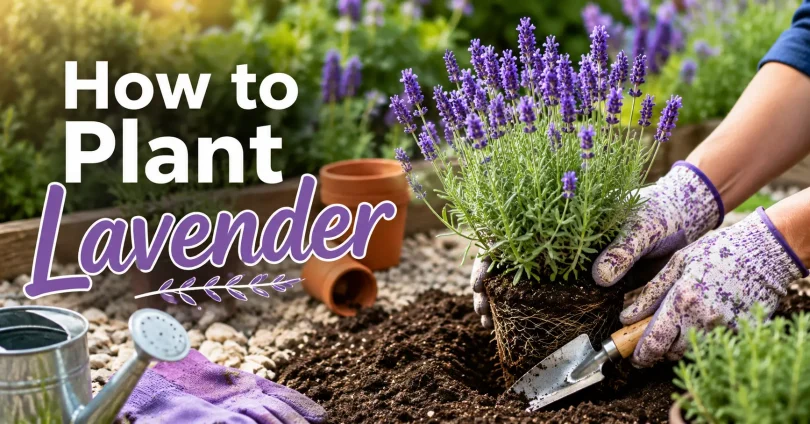
Lavender is one of the most beautiful and rewarding plants you can grow in your garden. Known for its calming fragrance, purple flowers, and ability to attract pollinators, lavender is easy to care for when planted correctly. However, many gardeners struggle because they plant it in the wrong soil, overwater it, or place it in areas with poor sunlight.
If you want to learn how to plant lavender, this complete guide will walk you through everything step by step. You will discover the best planting season, ideal soil, watering schedule, spacing, common mistakes, and expert tips to help lavender thrive for years.
Whether you want to grow lavender in pots, garden beds, borders, or pathways, this guide will help you achieve healthy plants with beautiful blooms.
Why Grow Lavender?
Lavender is more than just a pretty plant. It offers several benefits for gardens and homes.
Benefits of Growing Lavender
- Produces beautiful purple flowers
- Adds a calming fragrance to gardens
- Attracts bees, butterflies, and pollinators
- Naturally helps repel mosquitoes and insects
- Drought tolerant after establishment
- Perfect for gardens and containers
- Can be used for tea, oils, and home fragrance
Lavender is also a low-maintenance plant, making it ideal for beginners.
Types of Lavender
Before planting lavender, it helps to understand the different varieties because each grows better in certain climates.
English Lavender
English lavender is the best choice for beginners and colder climates. It is highly fragrant and ideal for cooking.
Best for:
- Cold weather areas
- Culinary use
- Strong fragrance
Popular varieties:
- Munstead
- Hidcote
- Vera
French Lavender
French lavender grows best in warmer regions and produces decorative blooms.
Best for:
- Mild climates
- Decorative gardens
- Warm temperatures
Spanish Lavender
Spanish lavender has unique flower heads and grows best in dry, sunny conditions.
Best for:
- Hot climates
- Ornamental landscaping
- Pollinator gardens
Lavandin
Lavandin is a hybrid variety known for larger plants and stronger fragrance.
Best for:
- Large gardens
- Essential oils
- Garden borders
Best Time to Plant Lavender
The best time to plant lavender is during spring, after the final frost has passed.
Spring planting gives lavender enough time to establish strong roots before summer heat arrives.
Best Seasons for Planting Lavender
Spring (Recommended)
Spring is the ideal season because warm soil encourages faster root growth.
Benefits:
- Better root development
- Faster growth
- Reduced frost risk
Fall (Only in Mild Areas)
You can also plant lavender during fall if winters are not too harsh.
However, plants need enough time to establish roots before freezing temperatures begin.
Avoid planting lavender in winter because cold, wet soil may cause root rot.
Where to Plant Lavender
Choosing the right location is one of the most important steps.
Lavender thrives in warm, sunny places.
Lavender Needs Full Sun
Lavender requires:
- 6 to 8 hours of direct sunlight every day
More sunlight leads to:
- Better blooms
- Stronger fragrance
- Healthier plants
- Less disease risk
Planting lavender in shade may result in:
- Weak growth
- Fewer flowers
- Poor fragrance
- Root issues
Good Air Circulation Matters
Lavender dislikes trapped humidity.
Plant it in open spaces with good airflow to reduce fungal diseases.
Poor airflow can lead to:
- Powdery mildew
- Root rot
- Weak blooming
Avoid Wet Areas
Never plant lavender in places where water sits after rain.
Lavender roots hate soggy soil.
Poor drainage often causes:
- Yellow leaves
- Drooping stems
- Root rot
- Plant death
If your garden has heavy soil, raised beds work best.
Best Soil for Lavender
One of the biggest reasons lavender fails is poor soil.
Lavender naturally grows in dry Mediterranean climates, so it prefers sandy, well-draining soil.
Ideal Soil Conditions
Lavender grows best in:
- Sandy soil
- Gravelly soil
- Well-draining soil
- Slightly alkaline soil
Ideal pH level:
- 6.5 to 7.5
Avoid clay-heavy soil because it traps water.
Best Soil Mix for Lavender
If your garden soil drains poorly, try this mix:
- 40% garden soil
- 30% coarse sand
- 20% gravel or grit
- 10% compost
This helps roots stay dry and healthy.
How to Test Soil Drainage
Here is an easy drainage test:
- Dig a hole about 12 inches deep
- Fill it with water
- Wait a few hours
If water remains standing, drainage is poor.
In that case, plant lavender:
- In raised beds
- On mounds
- In containers
How to Plant Lavender Step by Step
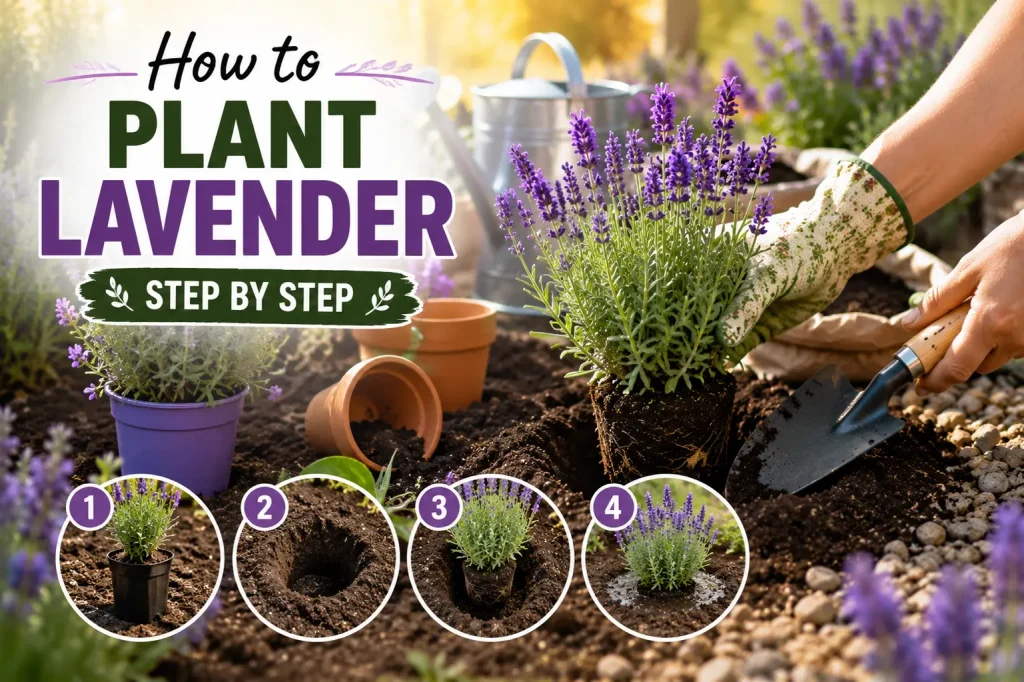
Follow these simple steps for successful planting.
Step 1: Prepare the Soil
Remove weeds and loosen the soil.
If drainage is poor, mix sand or gravel into the soil.
Step 2: Dig the Hole
Dig a hole slightly wider than the root ball.
Avoid digging too deep.
The crown should stay slightly above soil level.
Step 3: Place the Plant
Carefully remove lavender from its nursery pot.
Loosen roots gently.
Place the plant in the hole.
Step 4: Fill the Hole
Backfill with soil and lightly press around the plant.
Do not compact the soil too tightly.
Step 5: Water Lightly
Water immediately after planting.
Do not overwater.
Too much water is one of the biggest mistakes beginners make.
Step 6: Add Gravel Mulch
Instead of bark mulch, use:
- Gravel
- Small stones
- Pebbles
This helps prevent excess moisture around roots.
Avoid wood mulch because it holds too much water.
Lavender Plant Spacing
Spacing lavender properly improves airflow and reduces disease risk.
Recommended spacing:
- Small varieties: 18 inches apart
- Medium varieties: 24 inches apart
- Large varieties: 30–36 inches apart
Proper spacing helps plants stay healthy and bloom better.
How to Plant Lavender in Pots or Containers
Growing lavender in pots is a great option if you have limited space or poor garden soil.
Container growing is also helpful in cold regions because pots can be moved indoors during harsh winters.
Best Pot Size for Lavender
Choose a container that is:
- At least 12–16 inches wide
- Deep enough for root growth
- Equipped with multiple drainage holes
Avoid small pots because roots become crowded quickly.
Best Potting Mix for Lavender
Use a fast-draining mix.
A good container soil mix includes:
- Potting soil
- Coarse sand
- Small gravel or perlite
Avoid moisture-retaining potting mixes because lavender dislikes wet roots.
Best Place for Lavender Pots
Put containers where they receive:
- 6–8 hours of sunlight daily
South-facing patios, balconies, and sunny windows work well.
How Often Should You Water Lavender?
One of the biggest mistakes people make is watering lavender too much.
Lavender prefers dry soil over soggy conditions.
Watering Newly Planted Lavender
During the first few weeks:
- Water lightly every few days
- Keep soil slightly moist but not wet
This helps roots establish.
Watering Established Lavender
After establishment:
- Water once every 1–2 weeks
- Increase watering during extreme heat only
Lavender becomes highly drought tolerant.
Signs of Overwatering
Too much water often causes:
- Yellow leaves
- Drooping stems
- Mushy roots
- Root rot
Signs of Underwatering
Too little water may cause:
- Dry leaves
- Slower growth
- Wilting during extreme heat
The key is balance.
Always let soil dry slightly between watering sessions.
Does Lavender Need Fertilizer?
Lavender grows best in poor soil.
This surprises many beginners.
Too much fertilizer actually reduces flowering.
Over-fertilized plants usually produce:
- More leaves
- Fewer flowers
- Weak fragrance
Best Fertilizer for Lavender
Usually, lavender needs little to no fertilizer.
If necessary, use:
- Light compost
- Low-nitrogen fertilizer
Avoid heavy feeding.
Less is often better.
Common Mistakes to Avoid When Planting Lavender
Many people unknowingly damage lavender by making simple mistakes.
Planting in Shade
Lavender needs full sunlight.
Without enough light, blooming decreases significantly.
Overwatering
This is the number one lavender killer.
Wet soil causes root rot quickly.
Poor Soil Drainage
Heavy clay soil traps water.
Always improve drainage before planting.
Overcrowding Plants
Crowded lavender struggles because airflow decreases.
Poor spacing increases disease risk.
Over-Fertilizing
Too much fertilizer creates leafy growth instead of flowers.
Using Wood Mulch
Wood mulch traps moisture.
Instead, choose:
- Gravel
- Pebles
- Stone mulch
How to Keep Lavender Blooming
Many gardeners ask why their lavender stops flowering.
Here are simple ways to encourage more blooms.
Give Plenty of Sunlight
More sun equals better flowers.
Lavender loves heat and bright conditions.
Prune Regularly
Trim faded flowers after blooming.
This encourages fresh growth.
Avoid Too Much Water
Dry conditions support healthier blooms.
Do Not Overfeed
Lavender blooms better in nutrient-poor soil.
How to Prune Lavender Properly
Pruning helps lavender stay healthy and prevents woody stems.
Best Time to Prune Lavender
Prune:
- Early spring
- After flowering season
- Late summer
How to Prune
- Remove faded flower stems
- Trim about one-third of new growth
- Shape plants into a rounded mound
Avoid cutting into thick woody stems because lavender struggles to regrow from old wood.
How to Fix a Dying Lavender Plant
Competitor articles rarely explain this properly.
If lavender starts dying, check these issues first.
Problem: Yellow Leaves
Possible causes:
- Overwatering
- Poor drainage
- Root rot
Fix:
- Reduce watering
- Improve drainage
- Move to sunnier location
Problem: No Flowers
Possible causes:
- Not enough sunlight
- Too much fertilizer
- Poor pruning
Fix:
- Move to full sun
- Stop feeding heavily
- Trim correctly
Problem: Woody or Leggy Growth
Possible causes:
- Lack of pruning
- Age
Fix:
- Prune lightly every year
- Replace very old plants if needed
Best Companion Plants for Lavender
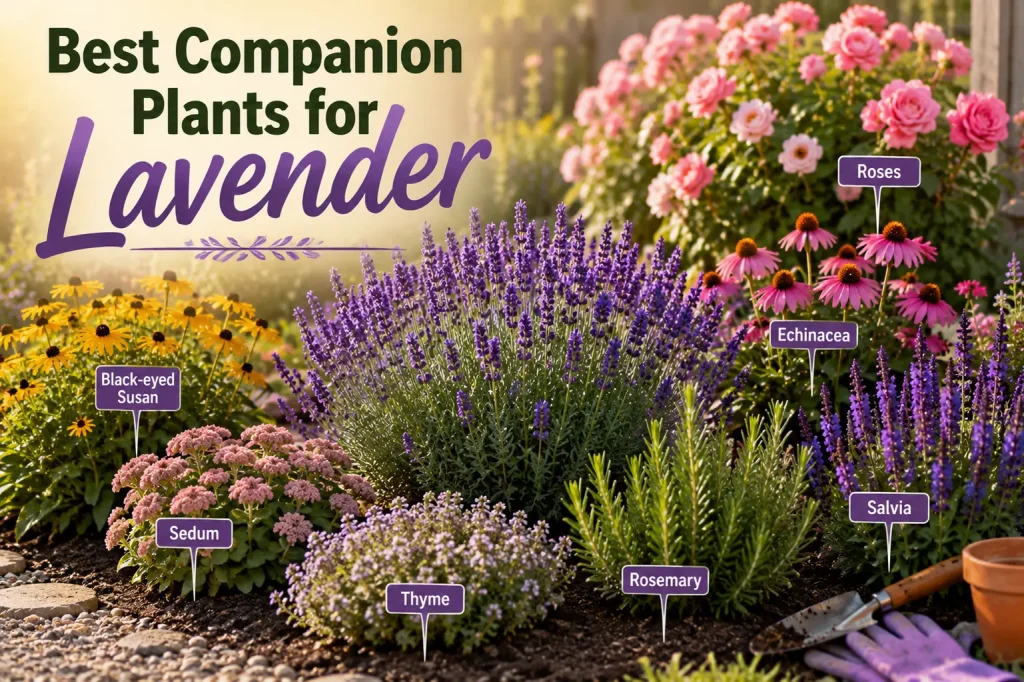
Lavender grows beautifully with drought-tolerant plants.
Good companion plants include:
- Echinacea
- Roses
- Salvia
- Sedum
- Black-eyed Susan
- Rosemary
- Thyme
These plants prefer similar growing conditions.
How to Harvest Lavender
The best time to harvest lavender is when flower buds begin opening.
Harvesting Tips
- Cut stems in the morning
- Harvest after dew dries
- Use clean garden scissors
For drying:
- Tie stems into bundles
- Hang upside down
- Store in a cool, dark place
Dried lavender works well for:
- Sachets
- Potpourri
- Tea
- Home fragrance
- Decorative arrangements
Is Lavender Easy to Grow?
Yes, lavender is one of the easiest plants to grow once you understand its needs.
Most problems happen because of:
- Too much water
- Poor drainage
- Lack of sunlight
Give lavender sun, dry soil, and airflow, and it will reward you with years of beautiful blooms and fragrance.
Frequently Asked Questions
How long does lavender take to grow?
Lavender grows slowly during the first year. Most plants begin producing flowers within the first growing season, but they usually reach full size after 2 to 3 years.
Can lavender grow in pots?
Yes, lavender grows very well in containers. Choose a pot with drainage holes and use fast-draining soil. Place the pot where it receives at least 6–8 hours of sunlight daily.
Does lavender come back every year?
Yes, lavender is a perennial plant in suitable climates. With proper care, it returns every year and can live for 10–15 years or even longer.
What is the best month to plant lavender?
Spring is the best time to plant lavender, especially after the last frost. In mild climates, early fall planting also works well.
Why is my lavender dying?
Lavender often dies because of overwatering, poor drainage, or lack of sunlight. Wet soil is the most common reason for root rot and plant failure.
How much sunlight does lavender need?
Lavender needs at least 6 to 8 hours of direct sunlight every day for healthy growth and abundant blooms.
Should I fertilize lavender?
Lavender usually does not need much fertilizer. Too much feeding can reduce flowering and cause excessive leafy growth.
Can lavender survive winter?
Yes, some varieties like English lavender survive cold winters very well. In extremely cold climates, mulch or container protection may help.
How often should I water lavender?
Newly planted lavender should be watered lightly every few days. Established plants usually need water only once every 1–2 weeks during dry weather.
What is the best soil for lavender?
Lavender grows best in sandy, gravelly, and well-draining soil with a slightly alkaline pH between 6.5 and 7.5.
Can I grow lavender indoors?
Yes, lavender can grow indoors if placed near a bright sunny window where it receives enough direct sunlight. Good airflow and proper drainage are also important.
What plants grow well with lavender?
Lavender grows well with drought-tolerant plants like roses, rosemary, thyme, salvia, echinacea, and sedum because they prefer similar growing conditions.
Why is my lavender not flowering?
Lavender may stop flowering because of insufficient sunlight, overwatering, poor pruning, or too much fertilizer.
Should lavender be pruned every year?
Yes, annual pruning helps lavender stay compact, healthy, and productive. Regular trimming also prevents woody growth.
Can lavender grow in humid climates?
Yes, but it performs best with excellent drainage and strong airflow. French and Spanish lavender varieties generally tolerate humidity better than English lavender.
Conclusion
Learning how to plant lavender is simple when you follow the right steps. Choose a sunny location, plant in well-draining soil, avoid overwatering, and prune regularly to keep plants healthy. Whether you grow lavender in garden beds, borders, or containers, proper care will reward you with fragrant flowers, pollinator activity, and long-lasting beauty. By following these expert tips, even beginners can successfully master how to plant lavender and enjoy thriving plants year after year.
You May Also Like It: